Journalism of Courage
 3 min read


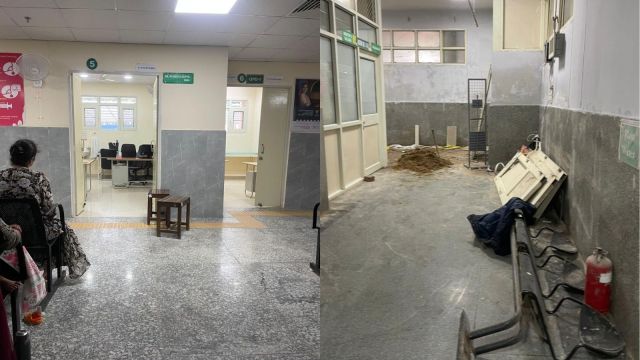 The corridors, thick with dust and the constant din of drills, felt suffocating. (Express Photo)
Last month, I walked into Civil Hospital, Sector 6, Panchkula on a Thursday , expecting routine care. Instead, chaos and neglect greeted me at every turn, offering a jarring insight into systemic decay.
From the outset, things were amiss. The road to the hospital was little more than a patchwork of bumps and potholes. The parking lot was a mess—littered with fallen leaves and heaps of construction debris. Finding no clear spot, I left my car outside, joining the growing stream of patients.
Inside, a lack of signboards left newcomers guessing their way around. At the registration desk—a crucial entry point for any patient—I was simply told, “udhar jaao,” without any clarity on next steps. Of two counters for women, only one operated while the other remained deserted, contributing to growing queues and confusion.
The corridors, thick with dust and the constant din of drills, felt suffocating. The state of the toilets shocked me. One reeked of urine, another had human waste left uncleaned. Soap was missing, several taps were broken, and not a single cleaner was in sight.
It was on the ground floor that I met Rasha, a young mother cradling her five-month-old baby, anxiously waiting for over an hour to collect a report. She wrapped her chunni tightly around her child to keep out the dust that filled every corner of the room. Around us, the sick, elderly, and expectant women sat—many covering their faces, trying to shield themselves from the dust and noise. The hospital’s indifference to the risks, especially for mothers and infants, was palpable.
Things only worsened at the psychiatry department. It was so packed that people stood shoulder to shoulder, with not a single fan working. Near the eye department, the smell of urine was so overwhelming that I could barely last five minutes before needing fresh air.
The most disheartening scene unfolded near the gynaecology ward around 12:10 p.m. An eight-month pregnant woman named Rani had stood outside the ward for 20 minutes. As soon as she was allowed in, a doctor told her, “haath gande hai abhi, jaao baadmei dekhenge,” and sent her away. Just then, a Coke bottle and a bag of chips were handed to the doctor by a colleague, while more than thirty women continued to wait outside. By 1 p.m., not a single doctor had arrived, and the number of waiting women only grew.
Elsewhere, beds were stacked untidily in dusty rooms, the only drinking water machine was broken, and the relentless construction noise made the entire building nearly unbearable.
When I contacted Dr Mukta Kumar, Chief Medical Officer, and asked about the mess and the stench, she said, “There is a large-scale construction going on, debris is bound to be there. The PWD is the one responsible for the construction. Sabko pata hai ye toh.”
That day, what should have been a simple medical visit left me shaken—not just for myself, but for every patient forced to navigate this daily ordeal in the hope of basic care.
The writer is an intern with The Indian Express.