5 min read
Stay updated with the latest - Click here to follow us on Instagram

Journalism of Courage



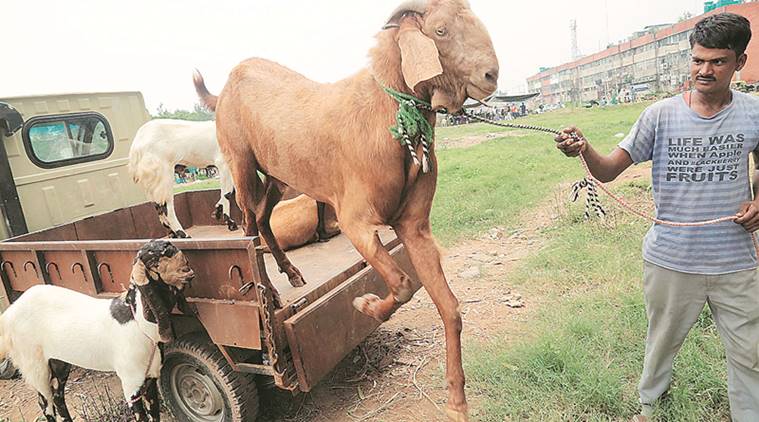 Slaughter of animals is creating an unhygienic situation and traffic hazards for citizens as reported to us
Two days before Eid-ul-Adha, a two-member team of the National Inspection Committee to check illegal transportation, slaughter and sacrifice of animals submitted a report to the Centre Monday after an inspection in West Bengal. The report cited illegal slaughter “khattals” coming up across the state ahead of Eid celebrations, cruelty to animals and a largely uncooperative state government during the inspection.The team, which included committee convener Dr S K Mittal, had arrived in Kolkata last Thursday and carried out a two-day inspection in the city and parts of the state.
“Because of Atalji’s sudden death, we were unable to meet the West Bengal chief secretary and principal secretary, who was out of town. However, we held meetings with the director of the animal husbandry department and other officials. We urged them to crack down on the illegal slaughter,” Dr Mittal told The Indian Express, adding that on Wednesday’s celebrations across Bengal, he had received reports of “reduced cow slaughter”.
“I received reports from Bengal that because of the inspection, cattle slaughter has been markedly less, especially at the stalls that function openly on the roadside,’’ he said.
Despite this, the team, in its report, claimed it received a “lukewarm response” in West Bengal. It said: “We are sorry to report that the team received a lukewarm response and so preferred to return as no security was provided (despite the Animal Welfare Board of India’s request sent before) in spite of our official communication and personal request to the principal secretary Animal Resource Development (as the matter was referred to him by the chief secretary, West Bengal), officials from the transport department, food safety department and police were not attached to the team. The matter…shall be brought to the notice of the central government for timely and appropriate action…’’
The team visited areas like Topsiya, Tangra, Khidderpore, Bhu Kailash, Cossipore Bridge, Ekbalpur, Ibrahim Road, Dent Mission Road, Matiapul, Raja Bazar and Kalighat in Kolkata, and saw, “Cows and progeny in roadside shanties (khattals)…display of healthy cows of all ages, calves (male and female) and bullocks. At some places, signboards with inscription ‘Cow for sale’ were displayed”.
“The team witnessed stalls with hundreds of cows…we were informed that…many more stalls (khattals) will be created and a large number of cows will be brought (ahead of Eid). Important areas are Kolkata Central, Cossipore Mandi, Saudagar Patti, Dumdum, Raja Bazar East Canal Road, Kela Bagan, Kasba, Park Circus, Patuli, Walt Gunj, Garden Reach, inside Lake Town, Bangur Avenue, Peelkhana, Mahesh Talla Dakghar, Kamar Hatti, Titagarh…Bangaon Lane area in Kolkata Central and other parts of West Bengal reported cruelty committed on animals in transportation, keeping in shanties to be sold for sacrifice on Bakr Eid on August 22, 23 and 24. These khattals are creating an unhygienic situation and traffic hazards for citizens as reported to us,” says the report.
Dr Mittal said, “The West Bengal government has not been implementing its own laws. It is in violation of the West Bengal Animal Slaughter Control Rules, 1950. Despite having 1,400 vets in their department, there is little inspection or monitoring done. Many of the animals being slaughtered have not reached the age of 14 years. Transportation of animals is also in violation of the Motor Vehicles Act, by which each animal is mandated to receive 2.5 square mt. of space while being transported; which means that in a truck which is 40 ft long and 8 ft wide, only 12 animals can be carried by law. We have found in West Bengal that 120 animals are carried in this space.”
The team also visited the Odisha-Bengal Highway to Kharagpur in Midnapore District. “…Where total ignorance of law and illegal activities by concerned officials was noticed. We were informed that cows brought illegally from different parts of the country are stored in Panduva Haat (about 120 km from Kolkata) in Bardhaman district. Near Hooghly, 30-50 trucks are unloaded daily and in Ulberiya Haat (55 km from Kolkata) 20,000 cows are brought. Feko Haat (approximately 55-60 km from Kharagpur is a weekly haat organised every Tuesday. Cows are sent mainly to Bangladesh from here. In Chowrangee Haat (4 km from Kharagpur), a cattle mandi is held every Sunday and Wednesday from where a large number of cows is sent across the state and to Bangladesh. Kharagpur is a main junction for cattle trade. This area witnesses hundreds of trucks carrying large animals like cows, buffaloes coming from the Jharkhand and Odisha borders daily. Each truck carries 50-70 cattle in a very cruel manner. Local markets…are functioning under the nose of the state administration. SPCA and state Animal Welfare Boards do not take notice of this cruelty,’’ the report said.
The six-member committee had earlier met senior officials of the Bihar, Jharkhand and Odisha governments in an attempt to stop transportation of cattle to West Bengal ahead of Eid.
Dr A G Bandopadhyay, director (animal husbandry) in the state government, refused to comment on the report while Anil Verma, principal secretary (animal husbandry) remained unavailable for comment.
Stay updated with the latest - Click here to follow us on Instagram