Journalism of Courage


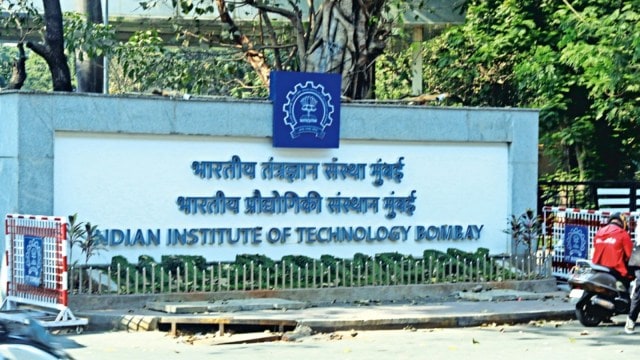 The main challenge, according to researchers, lies in the scheduling of non-daily trains, which operate on scattered days throughout the week. (Express File Photo)
Researchers from the Indian Institute of Technology (IIT) Bombay, in collaboration with the Centre for Railway Information Systems (CRIS), have developed an innovative system called ‘dailyzing’ to improve train scheduling efficiency for Indian Railways, the fourth-largest rail network globally. Their data-driven approach enhances the efficiency of train timetables without requiring the replacement of the existing, over 160-year-old infrastructure used by Indian Railways, which operates over 13,150 passenger trains daily.
The main challenge, according to researchers, lies in the scheduling of non-daily trains, which operate on scattered days throughout the week. Their irregular schedules lead to underutilized tracks on some days and congested bottlenecks on others, complicating efficient planning. Additionally, the various railway zones initially plan their schedules based on their own local resources, resulting in conflicts and sub-optimal usage of bottleneck sections across the larger network.
To address these issues, the team developed the concept of ‘dailyzing,’ which clusters non-daily trains based on similarities in their schedules. Prof Madhu Belur, from the Department of Electrical Engineering at IIT Bombay, explained that dailyzing involves grouping non-daily trains into clusters, making them operate as if they were daily services. “This process groups trains that share similar routes and times—within a 15-minute window—into predictable patterns. According to researchers, by treating these non-daily trains as part of a structured timetable, rather than as independent entities, railway planners can reduce inefficiencies and optimize track usage. This results in a more efficient timetable, filling scheduling gaps and allowing better resource utilization,” he said.
Prof Belur was joined by Prof Narayan Rangaraj from the Department of Industrial Engineering and Operations Research at IIT Bombay, and experts from Zonal Railways and CRIS. The team tested their model on India’s Golden Quadrilateral and Diagonals (GQD) network, a major rail system connecting Delhi, Mumbai, Chennai, and Kolkata. They used clustering techniques like Hierarchical Agglomerative Clustering (HAC), Density-Based Spatial Clustering of Applications with Noise (DBSCAN), and K-means to analyze real-world train data.
The researchers found out that the clustering approach has led to more compact and efficient timetables. It could also free up space for additional services. “For instance, if a cluster has fewer than seven trains (one for each weekday), extra trains can be added on free days, improving scheduling flexibility. The researchers believe this could help manage bottleneck sections more effectively, reduce delays, and optimize train flow,” said Prof Belur.
He said that Indian Railways, with support from the research team, has already begun implementing a modified version of the dailyzing model to improve scheduling on the GQD network and further refinements, such as integrating real-time adjustments, which could make the system even more adaptive and seamless, enhancing the overall efficiency of India’s vast railway network.

 3 min read