


 3 min read




MEA reacts to Sheikh Hasina’s death sentence
Tap for summary


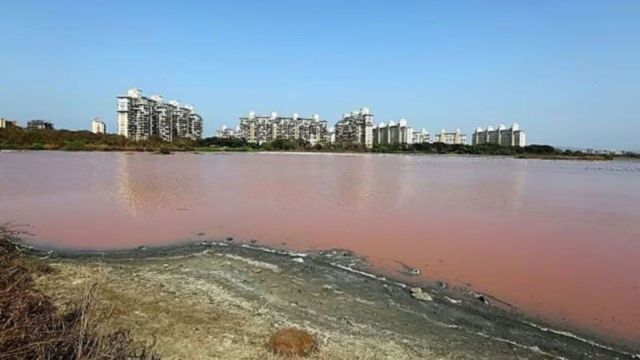 The BMC supplies approximately 3,850 million litres of water daily (MLD). (File Photo)
Although the monsoon has begun in Maharashtra, the catchment areas of the seven lakes that supply water to Mumbai are expected to receive significant rainfall. According to the Brihanmumbai Municipal Corporation’s (BMC) data, the combined water stock in all the seven lakes stands at 1,50,728 million litres, which is 10.41 per cent of the total 14,47,363 million litres of water that the seven lakes hold.
The BMC supplies approximately 3,850 million litres of water daily (MLD). Therefore, the current water stock is expected to last for approximately 39 days, while the overall supply is estimated to last around 375 days. However, due to incidents of leakage and pipeline bursts, a significant amount of water is wasted each year.
Meanwhile, civic officials said no water cut is in the pipeline. “There is no decision for imposing any water cut yet. We (BMC) are in constant contact with the weather bureau, which has predicted good rainfall in the catchment areas starting in mid-June. Therefore, we are confident that the catchment areas will replenish once the rain picks up. In addition to this, around 5.79 million litres of water was given to the BMC by the state government for reserve stock in case the rains delay any further,” an official told the Indian Express Monday.
Being an island city, Mumbai draws its water from seven lakes–Tulsi, Vihar, Bhatsa, Tansa, Upper Vaitarna, Middle Vaitarna, and Modak Sagar. While two of these lakes are located within Mumbai, the rest are in the neighbouring districts of Thane, Palghar and Nashik. The catchment area of these lakes gets filled during the monsoon, and the water is transported through tunnels to the BMC’s filtration plant. After filtration, water is supplied to every household and commercial establishment through pipelines and reservoirs.
The civic body’s data shows that last year, on June 9, Mumbai’s water stock stood at 5.95 per cent, while in 2023, the stocks stood at 10.63 per cent on the same day. Monsoon onset typically occurred between June 15 and 25 in the last two years, following which rainfall in the catchment areas increased only during the middle of July. Civic officials said that by the end of August or the first week of September, all seven lakes will reach their 100 per cent capacity.
The BMC’s data also shows that in the last 24 hours, only the catchment areas of Modak Sagar and Tansa lakes received a good amount of rainfall, with daily amounts of 1 and 2 mm, respectively. Meanwhile, to date, since the monsoon onset took place, the highest quantum of rainfall has been recorded at Bhatsa lake at 132 mm, followed by 125 mm at Tulsi lake, 54 mm at Middle Vaitarna, 49 mm at Vihar, 40 mm at Modak Sagar, 35 mm at Tansa and 17 mm at Upper Vaitarna.