4 min read
Click here to join Express Pune WhatsApp channel and get a curated list of our stories
© The Indian Express Pvt Ltd



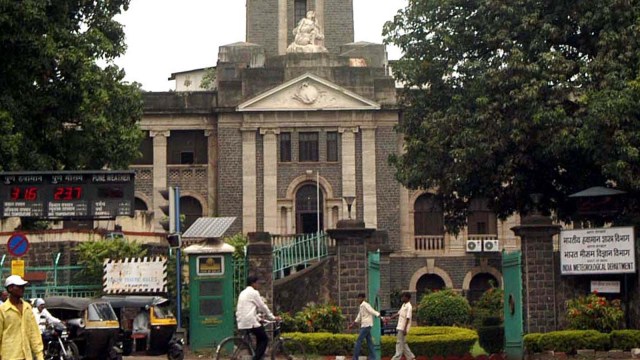 This British-era observatory holds the distinction of being among a handful of centennial meteorological observatories in the world -- a recognition given by the World Meteorological Organization (WMO) to those observatories that have been operational for more than 100 years. (Express Photo)
Pune’s Shivajinagar meteorological observatory has completely switched to round-the-clock solar-powered operations. This is the country’s first observatory run by the India Meteorological Department (IMD) to go green.
This exercise is part of the joint efforts by the Ministries of Earth Sciences (MoES) and Renewable Energy to promote green and clean energy at work spaces. A letter in this regard was received at MoES recently. IMD has pan-India offices and observatories, many of these set to soon carry out feasibility surveys ahead of adopting similar renewable energy measures.
In all, there are 520 big and small observatories gathering a range of either on-surface or upper-air weather data recorded over the country. There are 43 operational radiosonde dedicated stations and 62 pilot balloon observatories.
Officially known as the Central Agrometeorological Observatory (CAgMo), this observatory in the heart of Pune was established on the College of Agriculture campus in 1856. This British-era observatory holds the distinction of being among a handful of centennial meteorological observatories in the world — a recognition given by the World Meteorological Organization (WMO) to those observatories that have been operational for more than 100 years.
The IMD is celebrating 2024-25 as its 150th year. Both its office and observatory in Pune have had a lion’s share in the IMD’s operations for over a century now.
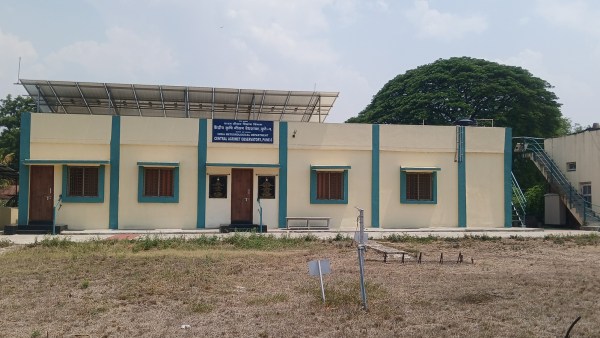 Officially known as the Central Agrometeorological Observatory (CAgMo), this observatory in the heart of Pune was established on the College of Agriculture campus in 1856.
In April last year, the CAgMo got a major facelift, with the new building equipped to house the various instruments required for weather data observations. It was inaugurated by M Ravichandran, secretary, MoES in the presence of Mrutyunjay Mohapatra, director general, IMD and other officers and staff. Now, 12 solar rooftop panels with a 8 kiloWatt system capacity have been installed on this building.
For its high-quality and wide-range of weather data generated, the CAgMO is a reference observatory for weather of Pune district. As an observatory operating 24×7, vital observations like temperature, rainfall, air pressure, humidity, wind speed and direction and a host of other upper observations, radiation measurements and agro-meteorological observations are recorded here as per international standards.
With data on sunshine hours across seasons handy, the CAgMO staff studied the electricity requirement and consumption patterns at the observatory for the past one year. The peak consumption was recorded during April-July months last year and the electricity bills for the corresponding period ranged between Rs 8,955-9,470.
“Since the commencement of solar powered-electricty generation little over a month ago, the power bill has been cut down to one fourth of the original bill amount. Since there is no need to store the generated electricity, the surplus is fed back to the power grid,” K S Hosalikar, head, Climate Research and Services, IMD, Pune, told The Indian Express.
In March, the Shivajinagar observatory generated 1,199 units whereas the consumption was 1,083 units. The power bill for the month has slumped to Rs 2,310 and the surplus 116 units were fed back to the power grid.
“As researchers of weather and climate change, this initiative by the Pune climate office will be an example for the world to adopt renewable energy. This is a small step towards the fight against climate change,” added Hosalikar.
According to the Ministry of Renewable Energy, about 741 MegaWatt capacity was installed under the grid connected rooftop solar programme in the country between January-November, 2023. Besides, 2.77 GigaWatt capacity was installed across sectors in the country, the ministry’s data stated.