5 min read

Click here to join Express Pune WhatsApp channel and get a curated list of our stories
© The Indian Express Pvt Ltd



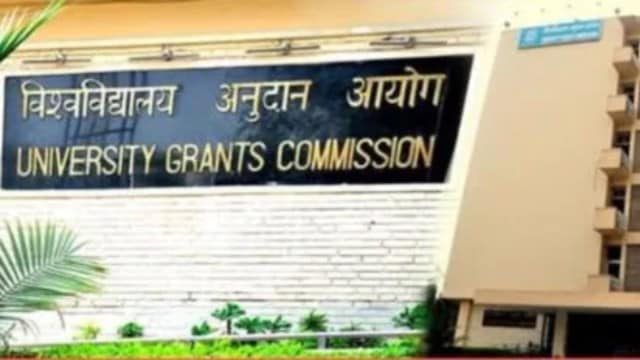 The ONOS scheme plans to provide academic journal subscriptions to universities in the country. (File Photo)
The One Nation One Subscription (ONOS) scheme, approved by the Union Cabinet on Monday with a budgetary allocation of Rs 6,000 crore, has been hailed by professors as it will foster interdisciplinary studies and bridge the gap in access to academic resources.
However, many have raised concerns over centralising control over academic resources and how academic freedom may be impacted if only such research materials are available that will align with the government agenda.
The ONOS scheme plans to provide academic journal subscriptions to universities in the country. A corpus of Rs 6,000 crore has been sanctioned for the initiative which aims to “provide country-wide access to international high-impact scholarly research articles and journal publications” to researchers in central and state universities across India.
As many as 30 major international publishers have been included in this scheme and 13,000 e-journals will be made available through national subscription coordinated by the Information and Library Network (INFLIBNET), according to a PIB press release. The scheme also aims to encourage core and interdisciplinary research in tier-2 and tier-3 cities, where access to these journals might be difficult. The Indian Express spoke to professors for their views on the scheme.
Dr Richa Ashma, professor at the department of zoology, Savitribai Phule Pune University, said, “I think this is a great initiative of the Government of India that will really help researchers pan-India. Even at the university level, researchers, students, and faculty do not have access to many of the journals. To get access to these research paper, they have to pay the subscription fee of the journal.”
Dr Pravina Sanjay Ugile-Pawar, professor at the department of physics at Dr Babasaheb Ambedkar Marathwada University (BAMU), Chhatrapati Sambhajinagar, opined that the scheme would be beneficial. “In my career, I have faced issues with many journal subscriptions like IOP and RSC. My university has subscriptions for many journals so I have not faced an issue for those. But a few journals that my university is not subscribed to, then it becomes very difficult for me. So I think the ONOS scheme will help to solve this problem,” she said.
Dr Ajay Dhawale, professor and HOD of the English department at Tuljaram Chaturchand College, Baramati, raised some concerns about the scheme. “ONOS is a bold initiative with the potential to transform access to research and drive innovation across India. By bridging resource gaps, it promises significant support for researchers in underprivileged areas. However, centralizing control over such resources raises critical concerns about its impact on academic freedom and the risk of aligning research priorities with specific agendas,” said Dr Dhawale.
“Centralizing control of research resources under a single agency like INFLIBNET raises serious concerns. There is a risk that this platform could be used to align research priorities with the government’s agenda, subtly influencing narratives and discouraging critical voices. This real fear cannot be ignored, especially in a system where transparency is not always guaranteed,” added Dr Dhawale.
For ONOS to truly benefit education and research, it must have clear safeguards against misuse. To ensure accountability and prevent misuse, ONOS should adopt a system of complete transparency. “This means sharing clear and detailed information about how resources are allocated, what research is being prioritised, and how the system is being used,” he added.
Dr. Giribala Bondle, associate professor of chemistry at BAMU also raised an important concern. “Providing access to 30 publishers is not enough. Most journals these days are open access and we lack the funding to get our research published in these journals. We end up collaborating with international researchers to pay the fees which is around Rs 1-1.5 lakh. Previously, even the UGC had provided us journals but many of them were not credible journals. In a way, we are being forced to publish in these non-credible journals, but we don’t do it. We need support for publishing our work in open access journals,” said Dr Bondle.
Dr Rahul Magar, assistant professor of history at SPPU, said , “It is a very good scheme, but there are three issues that can come up during implementation. First is that humanities and social sciences are always given less importance. What kind of journals will be made available for these subjects? The scheme is very good for science, but humanities should not be ignored. Second, there are many local language publications like Bhartiya Itihas Ani Sanskruti that are hardcopies and do not have an online presence. How will these be made available? English is the language of knowledge today but many scholars in Maharashtra write in Marathi, as it also has greater readership. Will these Marathi journals and other local language journals also be included?”
The third issue, Dr Magar said, is centralisation and the resulting politicisation of knowledge. There is the fear that any party that comes to power will try to spread its ideology and suppress the opposite ideology.
“This applies even more to a subject like history, where we cannot say what is the truth in a definite way, it is a continuous process. If steps are taken to allay these possible issues, the scheme is a brilliant one,” said Dr Magar.