Journalism of Courage



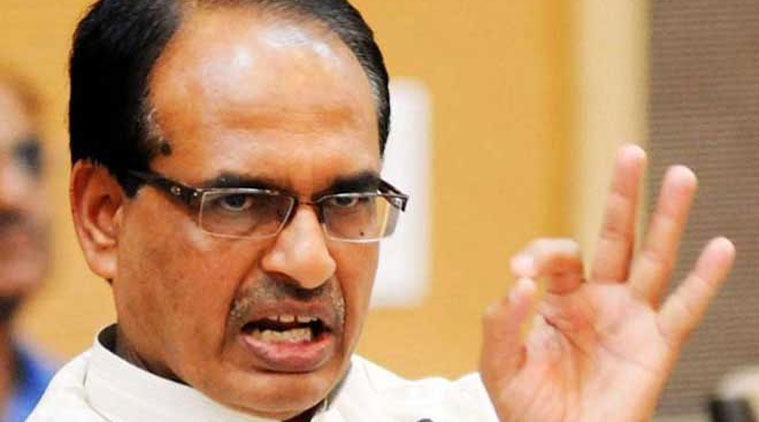 In the season of Vyapam, Shivraj Singh Chouhan’s govt has brought a law that will identify and blacklist ‘vexatious litigants’.
What is the Madhya Pradesh Tang Karnewali Mukadmebazi (Nivaran) Vidheyak, or Vexatious Litigation (Prevention) Act, 2015, about?
The Bill, passed by voice vote in the Assembly last week, seeks to prevent individuals from instituting or continuing with vexatious proceedings habitually and without reasonable grounds in the High Court and subordinate courts. The law can be used against persons who repeatedly file court cases, both civil and criminal, to harass others.
How will the law work to prevent vexatious litigation?
The Advocate General will file an application in the High Court to declare a person “a vexatious litigant” by pointing out that he/she has repeatedly and unreasonably initiated vexatious proceedings, either against the same person or against different persons. If the HC is satisfied that the complaint has merit, it will hear the person before declaring him/her a “vexatious litigant”. If he/she cannot afford an advocate, the court will arrange for one.
What happens after a person is declared a “vexatious litigant”?
The court will issue an order forbidding him/her from instituting any civil or criminal proceeding in any court of the state without permission from either the HC or the District and Sessions Court. Permission will be given only after the court has satisfied itself that the proposed proceedings are not an abuse of the legal process. The freeze order, which will be notified in the gazette, will also apply to cases already filed. The “vexatious litigant” will not be required to seek permission before filing a habeas corpus petition, or a case to seek bail.
Can the “vexatious litigant” appeal?
Yes, in the Supreme Court.
Does such a law exist elsewhere else in the country or the world?
Tamil Nadu and Maharashtra have had them for decades. The Madras Vexatious Litigation (Prevention) Act, 1949, was amended as the Tamil Nadu Adaptation of Laws Order, 1969. The Maharashtra Vexatious Litigation (Prevention) Act came into being in 1971. Kerala considered a similar law as well, but the government did not ultimately table the Bill in the Assembly. The Supreme Court has upheld the validity of the laws in Maharashtra and Tamil Nadu. Laws curbing vexatious litigation exist in the UK, USA, Canada, Australia and New Zealand.
Is there a central law against such litigation in India?
No. But the Law Commission’s 192nd report submitted in June 2005 made such a recommendation. It pointed out that the Tamil Nadu and Maharashtra laws were based on an old statute in England. The report recalled how the Commission, in its 189th report, had agreed with Lord Macaulay who had remarked, 160 years ago, that increasing court fees was not an answer to vexatious litigation because that would drive away genuine litigation. Dishonest plaintiffs were around even when courts did not charge fees, he said.
What else did the Law Commission report say?
The Commission said that not only the Advocate General, but also the Registrar General, or the person against whom such litigation has been initiated, may move court to have someone declared a vexatious litigant. The panel had drawn up a draft central anti-vexatious litigation law.
Why are activists and lawyers opposing the Madhya Pradesh law?
There are apprehensions that the law would be used against them because the political leadership and many bureaucrats are alleged to be involved in the Vyapam scam. Scores of PILs had been filed in the High Court after the pre-medical test (PMT) scam broke in July 2013. Some PILs about irregularities in admissions in private medical and dental colleges are still pending in court. The opponents say the timing of the legislation is questionable because it has come when the government is under pressure.

 4 min read