Journalism of Courage
 5 min read


 Taste of home: Punjabi food varies widely within the state. (Source: Vernika Awal)
Punjab, the land of five rivers, has always fascinated people — be it its food, or its larger-than-life culture, its big, fat weddings, the fun and joy of its music, and much more. Despite being from a Punjabi family, I’ve barely spent time in the state since my family has always been on the move. So, recently, I took a month off and toured the iconic as well as lesser-known corners of Punjab. I came back with a plethora of sounds, smells, tastes and sights that define the history-soaked land better than the stereotypes:
On my second day in Adampur, a small town in Jalandhar district, a seemingly quiet afternoon was suddenly interrupted by a rattling, rhythmic buzz. Instinctively, my cousin grabbed the largest steel mug from the kitchen and walked out to meet the source of this noise — a semi-automatic sugarcane juice machine. This brings about the ritualistic 10-minute everyday communion of neighbours, and a whole lot of chatter.
The quiet afternoons in these corners of Punjab are often redolent with the smell of masalas — of garlic being fried and added to a batch of freshly ground onion. From the kitchen below, there is the faintest sound of the silbatta. The sound of distant laughter and conversational Punjabi punctuates the smell of the occasional bhatti masala on Sundays. As all of this comes together, the wail of a peacock reminds me that this is a land where you are not running at breakneck speed, and that things are a bit more old school.
It is all of this that you wake up to in the numerous cities and suburban towns of Punjab. Each smell and each sound, from the bell of a bicycle to the hark of the vendors, is a character by itself.
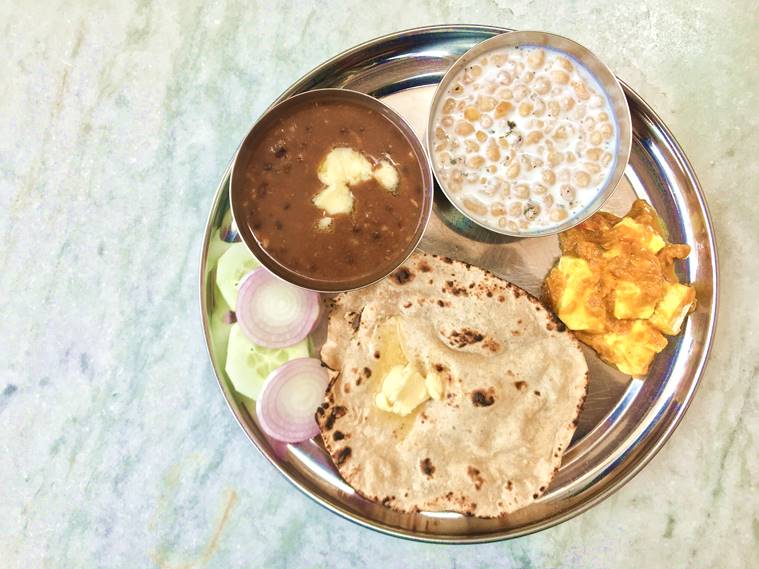 Tandoori rotis were once made at the family’s common tandoor. (Source: Vernika Awal)
Food, of course, is the centrepiece of any journey that you associate with Punjab. It is a saga of Punjab’s culture, heritage and varies widely even within the state, which I soon realised as I reached Amritsar. I wanted to explore Amritsar through food and through stories of its everyday people. We made our first stop at the legendary Bharawan da Dhaba run by Subhash Vij and his family since 1912. Vij, a third-generation owner of the eatery, has been running it since the last 43 years. When asked what draws people to his eatery from far and how they have managed to retain its legacy for over a century, he said, “Ann ka nasha toh sabko hai. (Everyone is addicted to food).”
“With every generation, the food preferences change and newer stuff becomes available in the markets and it is natural for people to try something new. But what will never change for us is the feeling of returning to your roots. We will always seek comfort and we will always seek ‘apna khaana’. That is the secret of our success,” he said.
These are the very roots that define Punjab’s culinary history. And yet, these traditional colours and smells are not just what is typically publicised as Punjabi khana everywhere.
The food journey of Punjab today is a lot about preserving the past. One such instance is the tandoori roti, which was once extensively made at home. Now, with modern kitchens, new ways of jugaad have emerged. So a tandoori roti which would earlier be made in the common tandoor of the family, is now made in an overturned pressure cooker. Mind you, this isn’t as easy it sounds. The dough is kneaded in a way that it isn’t too firm or too loose, but has ample room for aeration. The little balls of dough are then rolled out into rotis and then dabbed with a little water to make it stick to the cooker. The result is phenomenal, with light tandoori rotis being served with butter and the subzi or dal of the day.
Another such story is the history of rice. Although Basmati rice is grown in Punjab and supplied throughout the country, the Punjabis have a natural inclination towards rotis and parathas. The reason for this was that rice was always expensive and usually cooked only for special occasions. So, the usual rajma-chawal and kadhi-chawal were once enjoyed with rotis and not rice. In fact, cooking rice was so special that one wouldn’t just serve steamed rice to the guests. Even now, if you go to a Punjabi household, you’d notice that they serve a burhani pulao with lightly fried onions, which is best enjoyed without any accompaniment.
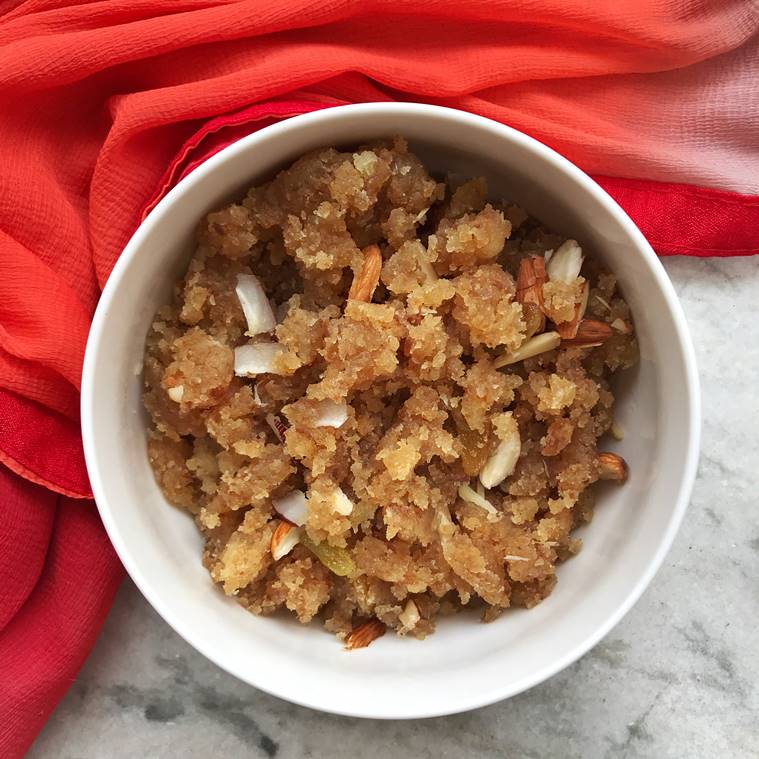 A bowl of bread halwa. (Source: Vernika Awal)
Finding your own roots in Punjab is a combination of all of this. From the history of the phulkari artwork, to the stories of every family’s traditions, Punjab is the land of cultures that must be preserved, and not lost in the razzmatazz of new-age restaurants and the set-list of Punjabi food.
In every corner of Punjab, hides stories of a bygone era. As for me, I’ve only begun finding my roots, and the journey is far from over.