


© The Indian Express Pvt Ltd
Tags:


Unlike cities that are unsure of themselves, Chandigarh is definitive. At its core, there’s not a building out of place or a shop out of turn. It’s perhaps quite some distance away from its designer Swiss-French architect Le Corbusier’s intent but it still carries the stamp of a well-planned city. But for some, it is an incongruous mix of modernism and colonial imposition.


His father bought the 2,500 sq yards house for Rs 12,500 in 1955. “Today, I can’t afford to buy my own house,” he says. Earlier this year, the Supreme Court banned the conversion of independent houses into builder apartments in Sectors 1 to 30, which were planned and detailed in the initial phase of the making of the city and today have heritage status. The Chandigarh Master Plan 2031 states that the population density during the last five decades has increased ninefold, from 1,051 to 9,252 persons per sq. km. According to the 2011 Census, the population is 1,055,45.
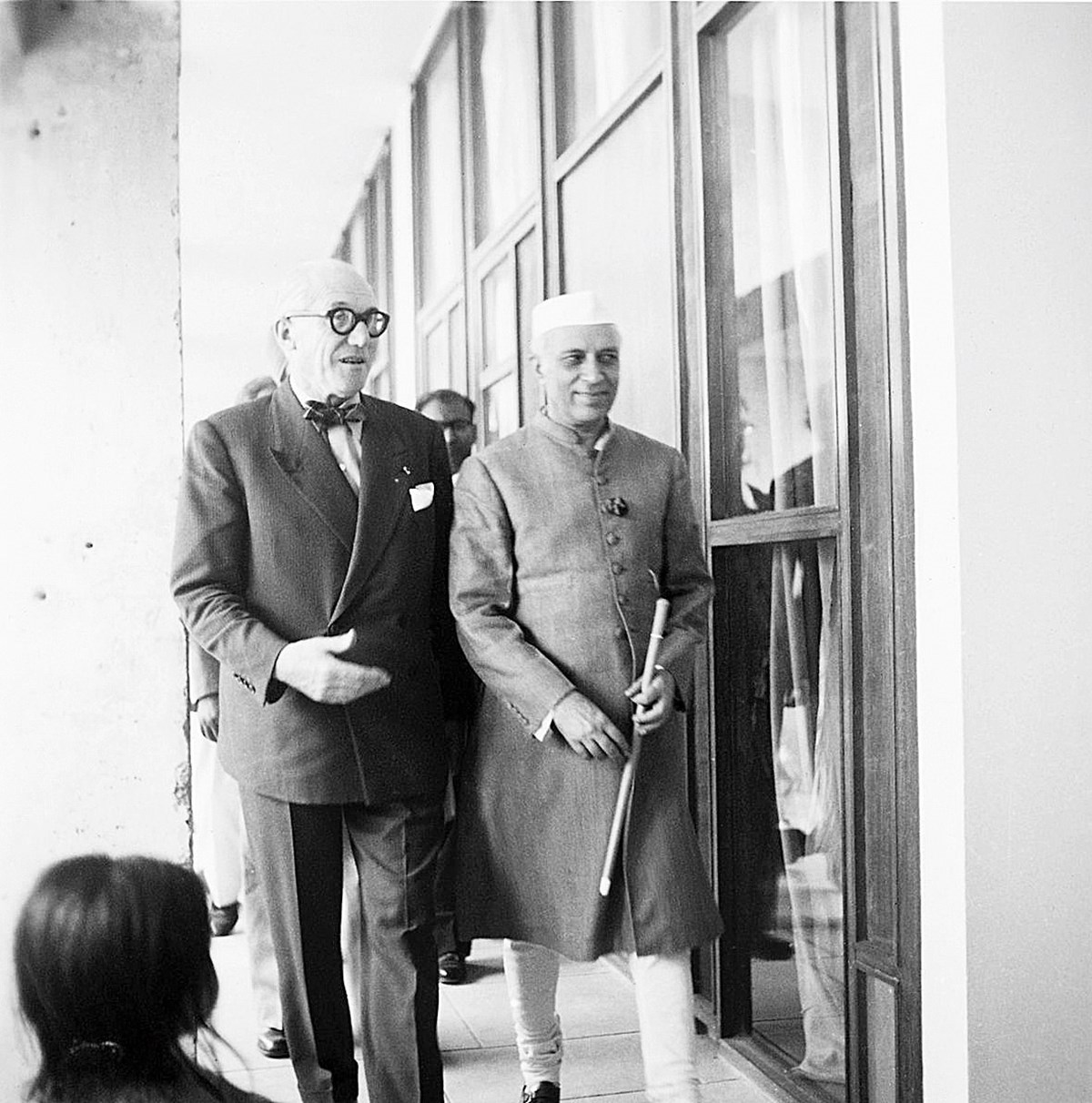
When Corbusier mapped out the city, it was meant to have a population of 1.5 lakh people, providing all income groups quality of life, with sun, space and greenery in good measure. When the French asked him what he would do in India, given that Indians have no money, he is said to have replied, “I’ll make it a big village – La Ville de Chandigarh (the village Chandigarh).”
And it was planned as that, making each sector (800x1200m size units) self-sufficient and creating that neighbourhood experience, with its own market square, housing and parks. But as an ‘ideal’ city, it’s not without its challenges. About three years ago, the Supreme Court slammed the Punjab government for the Tata Camelot housing project, which would have had 19 towers, 92 m-high, spread across 52 acres, in the Sukna wetland area. About 95 MLAs were to be recipients of flats, with views of the lake and the Shivalik hills in the distance. More recently, there were suggestions for multi-level parking for High Court officials as well. The pressures of real-estate lobbies and an over-populated city are growingly threatening the shine of independent India’s first planned cities.
The documentary The Power of Utopia – Living with Le Corbusier in Chandigarh (2023), which won best film at the Venice Architecture Film Festival, opens up new ways of looking at the city and asks the question, “What can we learn from Chandigarh today?” Its Swiss filmmaker Karin Bucher calls the city “a Rorschach test”, where multiple interpretations are possible. “Chandigarh is the subject of much controversy. It depends on how you want to look at the city and how you judge it… The city is an experiment and stands for the utopia of a humane city, which was built according to the ‘measure of man’ and should enable a harmonious life in harmony with nature,” she says.
“Chandigarh is a vibrant tapestry of human achievement, a testament to our collective ingenuity, and an example of meticulous urban planning and design. There are many things that I love about the city, theme-based sprawling gardens, a rich mosaic of traditions, and a symphony of creative pursuits that harmoniously coexist. It is a place where strangers become neighbours, where friendships are forged, where dreams are realised. Chandigarh was the major factor that led me to take the decision to leave my Canadian citizenship and come back to my hometown,” says Hardeep Chandpuri, publisher, radio personality, entrepreneur, who lives in Sector 33.
*********
With Partition, western Punjab ceded its capital city of Lahore to Pakistan. The Indian part of the state had a million refugees and no capital. After months of deliberation, then Prime Minister Jawaharlal Nehru decided it best to create a new capital than carve out one from its rural centres. The then chief engineer of Punjab, PL Varma, and PN Thapar, state administrator of the Public Works Department (PWD), chose the site and gave it the name, Chandigarh, after the Chandi Mandir in the same vicinity.
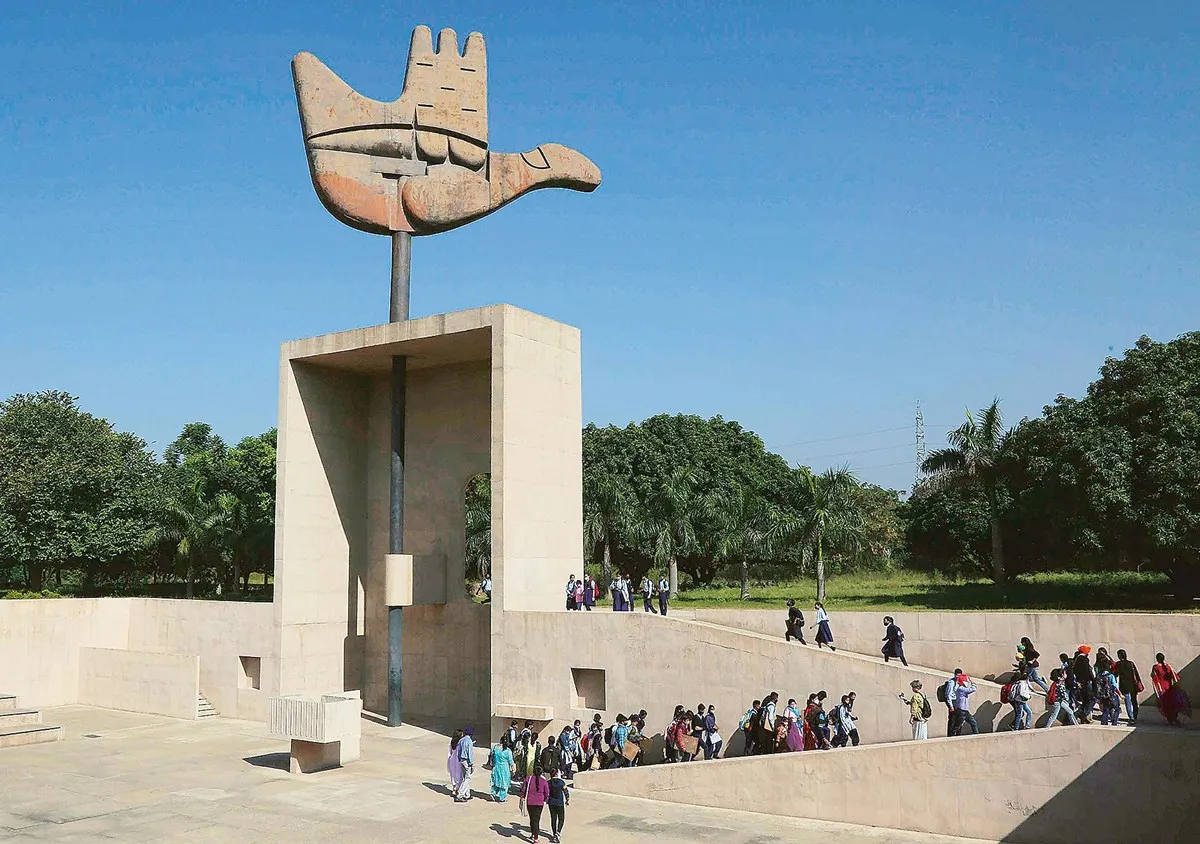
While on one hand Nehru’s vision of building “new temples for modern India” included foundaries and factories, roads and dams, institutions and power plants, he was also very aware of the intense need for housing. On the scene was immigrant-German architect and planner Otto Koenigsberger, who was the state architect for Mysore. He had developed master plans for Bhubaneswar, the new capital for Odisha and subsequently Faridabad (outside Delhi) and Kalyani near Kolkata. In his designs, the ‘neighbourhood unit’ as an idea had seen a pedestrian-friendly housing plan. Chandigarh’s initial planners American architect Albert Mayer and Polish architect Matthew Nowicki had proposed a fan-shaped curvilinear plan, with meandering streets. However, with the tragic passing away of Nowicki in a plane crash, the mantle of Chandigarh’s architect fell on Corbusier.
Few may know that Le Corbusier’s actual name was Charles-Édouard Jeanneret and that he was a self-taught architect. By the time Varma and Thapar met him, he was already a leading voice in modern architecture, having published his most influential work, Vers une architecture (Toward an Architecture, 1923). It would become a manifesto for architects that showed them how to build with a spirit of inquiry. His five principles of design seen best in Villa Savoye, in the outskirts of Paris, became a touchstone for his projects across the world – pilotis (stilts), roof gardens, ribbon windows, blank facades, and open plan. One who denounced the decorative arts, his most famous project, Unité d’ habitation In Marseille, for standardised housing units, was an answer to the damages of war.
“The period from the 1920 to the ’50s was cataclysmic, the war has created opportunities to do things that were new all across Europe. Steel was being used in Constructivist Russia, and the Brutalist school of thought was emerging…There was a new kind of thinking that was germinal to the modernism movement. Concrete was the elastic material of the 20th century and reinforced concrete allowed for the flexibility of spaces and volumes. Corbusier was also an artist who was very purposeful with his forms. He saw the house as a machine, how the Industrial Revolution was changing lifestyles. Chandigarh was a recognition of that need for a humane, progressive way of life,” says Ahmedabad-based conservation architect and academic Rabindra Vasavada.
While Corbusier managed the design for Chandigarh sitting in his Paris studio (he would visit India twice a year), on ground, it was his cousin Pierre Jeanneret, who stayed in the city from 1951 to 65, and British architects Jane Drew and Maxwell Fry, who fine-tuned the details for the institutional, commercial and residential parts of the city.
Architecture critic William Curtis in a talk had once said, “While Corbusier felt the modern world was not doing justice to scientific advancement and growth, he was also mindful of the constants of the great masters before him. He took it upon himself to transform the myths and principles of those constants and create something new with the technologies and spirit-inspired approaches of the time.”
City-based architect Shivdatt Sharma, who was among the team of Indian associates, says, “Chandigarh is a need-based city, a handmade city. When Corbusier, Drew and Fry came they thought they could bring in new technology and machines to build the city but when they arrived, they realised what they had to do was increase employment and improve the regional economy. Bricks and cement then were the mass materials of choice. The entire project was done on a very tight budget.” Records show that the High Court building was built with Rs 40 lakh, and with limited money for lifts, ramps became its design feature and tapestries in the courtrooms served both acoustic and aesthetic functions.
Deepika Gandhi, former Director, Le Corbusier Centre, who also worked on the dossier for the ‘World Heritage’ nomination of the Capitol Complex, spoke of Corbusier’s idea of giving the city back to the people. He had said, “The seed of Chandigarh is well sown. It is for the citizens to see that the tree flourishes.”
Chandigarh was seen as the “new town symbolic of the freedom of India, unfettered by the traditions of the past…an expression of the nation’s faith in the future” by Nehru. While he acknowledged that he did not like every building, it was the creative approach in its design that caught Nehru’s imagination, having him prophetically declare that “Chandigarh would influence buildings all over India in the future”.
*****
As we enter Sector 17, the heart of Chandigarh beats to the voice of a minstrel seated in a forgotten corner of this 250-acre complex. Unlike most open bazaars, which have a compact scale, here shops are spread across three plazas, with four-storey buildings hoisted on double-height columns. Even as the grey of the concrete wears a dull look, complemented by government offices on the ground floor, incongruous signages of stores and broken cables remind one of what neglect and fossilised ideas of heritage can do to a space. That doesn’t deter youngsters from gathering to hear one another play the guitar or sing impromptu, for a tired shopper to sit beneath a tree and sip her chai, for a theatre group to present a street play. While one may feel the walk is far too much in warmer climes, the market is a reflection of what Corbusier had intended for it – to become a place for the people, of the people.
“Chandigarh affected the way we spoke, moved, painted,” says artist-photographer Diwan Manna, who joined Government College of Art in the city in the ’80s. “We discovered a certain openness and boldness in the use of primary colours that we saw in the High Court and on the enamel door of the Assembly. One could see the connect people had with nature, be it in their plants in their balconies, their lawns, or the green avenues across the city. Our college building itself was a work of art. And while Chandigarh has retained much of what Corbusier had planned, there is a distinct hegemony of space, there is a divide. People, who are migrants, often labourers who come to work here, have no place in the centre of the city.”

Architect Madhu Sarin in her essay in The Open Hand, edited by Russell Walden (1982), writes, “Today, there are virtually two separate faces of Chandigarh: the planned and the unplanned. What Chandigarh is like as a place to live depends largely on which of the two one belongs to.”
The satellite cities of Chandigarh – Panchkula and Mohali – look like their architects were on a holiday. Their haphazard construction, high densities and unplanned streets are a striking contrast to Chandigarh’s grid-based planning. While in Sectors 1 to 30, buildings cannot go above three floors, the rule isn’t followed in the other sectors. “Chandigarh, at its core, is alive today because of its city planning rules and regulations and zoning, else it would have been finished,” says Sharma, as we sit in his office in Panchukla.
While the Chandigarh plan often faces criticism, even being called a “city of separate rooms, a zenana city” as late architect Charles Correa called it, he also lauded Corbusier’s intent. In his book A Place in the Shade (2010), Correa writes, “Corb’s work opened a door into another landscape. He showed us that we were free to invent our own future. Not by slavishly following his language – but through his example, finding the courage to discover our own voices.”
Amid the vibrance of the phulkari and the songs of minstrels in Sector 17 market, one is left wondering how people of the city make their peace with this dichotomy, between the extravagance and flamboyance of a colourful culture and the starkness of grey concrete. “The ‘failure’ of modernism was its inability to transfer idiom, which is to say to persuade people of the quality of its visual character. Indians are happy to make foreign idioms their own – think of the Taj Mahal (Persian) and the colonial architecture. But they don’t like raw concrete and dull standarised buildings. We need a new Punjabi modernist aesthetic,” says architectural historian and theorist Vikramaditya Prakash, whose father Aditya Prakash, was one of the architects who worked on the making of Chandigarh with Corbusier.
However, residents have their lived experiences to share. Nagina Bains, an entrepreneur in Sector 18, says, “Chandigarh is my heart; how else do I define this love story? I was born here, grew up here, my life is here, so Chandigarh is my story, my romance with life, love, loss, and learning. The trees of Leisure Valley have seen more declarations of love and promises than any other park, I’m sure. Chandigarh is a dream that you always love waking up to.”
Of course, the city is not without its slums along the fringes, issues of illiteracy and unemployment, and traffic snarls continue to stall its potential. But as Corbusier said, “Utopia is the reality of tomorrow”.
And for someone like Col (Retd.) Ashish Bedi, who lives in Sector 33, “It is the first and only home”. “As a soldier, I have travelled the length and breadth of this country, but when the time came to finally find a permanent abode, Chandigarh was the only choice.”
(With inputs from Parul)


