4 min read
Stay updated with the latest - Click here to follow us on Instagram

Journalism of Courage



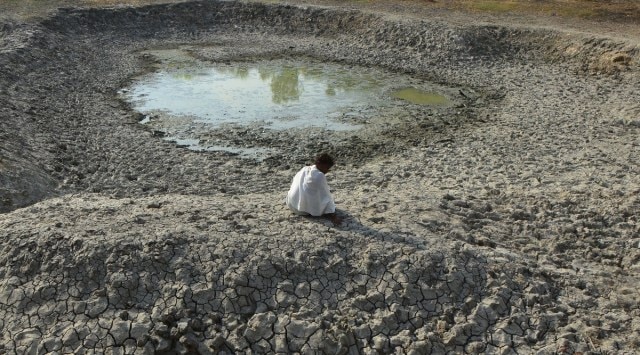 An man takes rest on the parched area of shrunken Varuna River during a hot day, in Phoolpur, some 45 km from Allahabad on June 8, 2019. (Express Photo by Ritesh Shukla)
 The Centre for Policy Research (CPR) on Monday released a report analysing all 37 heat action plans (HAPs) across 18 states to evaluate how policy action is keeping up with the warming weather in India, which finds that heat action plans in India are not only poorly funded but have a weak legal framework.
The report, ‘How is India Adapting to Heatwaves?: An assessment of heat action plans with insights for transformative climate action’, follows closely on the heels of the IPCC AR6 Synthesis Report which released last week and emphasised the need for the world to reduce emissions in the next two decades to prevent warming temperatures to reach 1.5 degrees Celsius.
India witnessed unprecedented heatwaves in 2022 and February 2023 was declared the hottest February since 1901 by the India Meteorological Department. A study by World Weather Attribution last year analysed the climate imprint on the Indian heatwave and claimed that human-induced actions made the chances of extreme heat events 30 times higher in the region.
CPR’s report finds that in India, most HAPs are not built for local contexts, that is, the heat action plans across the country generally focus on dry extreme heat and ignore the threats posed by humid heat and warm nights. Most HAPs adopt national heatwave thresholds that may not be suited to the risks faced by local populations. Only 10 out of 37 HAPs seem to have locally specified temperature thresholds, it says. Climate projections, which could help identify future planning needs, are not integrated into current HAPs, it further adds.
“HAPs are India’s primary policy response to economically damaging and life threatening heatwaves. They prescribe a variety of preparatory activities, disaster responses, and post-heatwave response measures across state, district, and city government departments to decrease the impact of heatwaves,” says the report.
“Nearly all HAPs fail to identify and target vulnerable groups – only two HAPs carry out and present vulnerability assessments (systematic studies to locate where the people most likely to be affected are in a city, district, or state). While most HAPs list broad categories of vulnerable groups (elderly, outdoor workers, pregnant women), the list of solutions they propose do not necessarily focus on these groups,” it adds.
Pointing out that the HAPs are underfunded, the report says that only three of 37 HAPs identify funding sources while eight HAPs ask implementing departments to self-allocate resources, “indicating a serious funding constraint”, says CPR.
The CPR further finds that the HAPs have weak legal foundations. “None of the HAPs reviewed indicate the legal sources of their authority. This reduces bureaucratic incentives to prioritise and comply with HAPs instructions. There is no national repository of HAPs and very few HAPs are listed online. It is also unclear whether these HAPs are being updated periodically and whether this is based on evaluation data,” the report adds.
“India has made considerable progress by creating several dozen heat action plans in the last decade. But our assessment reveals several gaps that must be filled in future plans. If we don’t, India will suffer damaging economic losses due to decreasing labour productivity, sudden and frequent disruptions to agriculture, like we saw last year, and unbearably hot cities as heatwaves become more frequent and intense,” said Aditya Valiathan Pillai, associate fellow at CPR and co-author of the report.
Stay updated with the latest - Click here to follow us on Instagram