Journalism of Courage



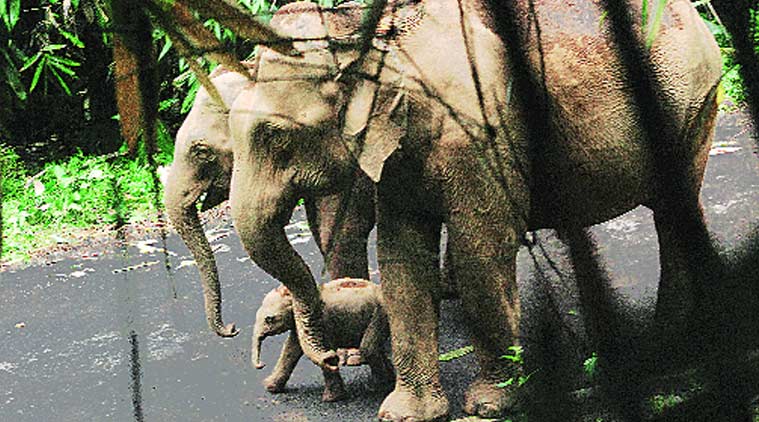 The Tusk That Did the Damage explores the human-elephant conflict from the perspectives of three parties.
Title: The Tusk That Did The Damage
Author: Tania James
Publisher: Vintage/Random House
Pages: 221
Price: Rs 499
But for the rapacity of men, Sooryamangalam Sriganeshan would have been just another elephant calf in the vast tracts of forest land in south India, unnamed, untamed and perhaps, quite unremarkable. Instead, a witness to the killing of his mother and the massacre of two other bulls in his herd, and bound to a life of servitude, he becomes the Gravedigger, a rogue elephant who terrorises the countryside and gives his victims a burial of leaves.
He is the most compelling protagonist of Tania James’s second novel, The Tusk That Did the Damage, which explores the human-elephant conflict from the perspectives of three parties: the Gravedigger, Manu, the younger brother of the poacher Jayan, and Emma, one half of a couple of American documentary filmmakers in search of a career-making project. James casts an impressive pool of characters — the small community that lives in the villages abutting the imaginary Kavanar Wildlife Park, coping with the changes in forest law that restricts their access to but not their interaction with the jungle; the vet who works in close collaboration with the forest department; government officials in charge of protecting the animals and integrating the villagers into the conservation project.
[related-post]
Through them, James builds up a realistic picture of the problems that dog conservation in Asia — poverty, lack of education and opportunity, greed and corruption — and gives an insight into India’s dichotomous relationship with the beast that is both revered as divinity and relentlessly hunted for its ivory tusks.
Demands of space and livelihood have long brought animals into conflict with humans, so stories of their face-offs and their fatalistic outcomes are hardly new in popular culture. Where James’s work soars is in the way she builds up the Gravedigger’s narrative. His universe is governed entirely by sensory perceptions of pleasure, anger
and anguish, and a yearning for a life gone awry: “Other memories he kept: running through his mother’s legs, toddling in and out of her footprints. The bark of soft saplings, the salt licks, the duckweed, the tang of river water, opening and closing around his feet.” The opening chapter is one of the most lyrical sections of the novel, though James is careful to steer clear of over-sentimentality and the omniscience of the first person.
The Gravedigger’s reflections come at a remove of the third person and is laid out in blocks of text, raw like felt emotions, and quite credible.
James is astute in her imagining of rural India, an universe steeped in fables, myths and the magnetic pull of religion, even as it struggles to find its feet in a changing world. Some of the most interesting characters in the novel are people who belong to this world — Leela, Jayan’s wife, who is intent on making him give up poaching and keeping him on the straight and narrow, and Raghu, Jayan and Manu’s cousin, and the latter’s best friend, who is one of the Gravedigger’s victims.
James falters in depicting the foreigner’s interpretation of this complicated process. Her Emma is too much of a textbook heroine, too gimmicky for the rest of the novel. She cannot bear the weight of the problem that the author has handled so beautifully elsewhere.











 4 min read