Journalism of Courage



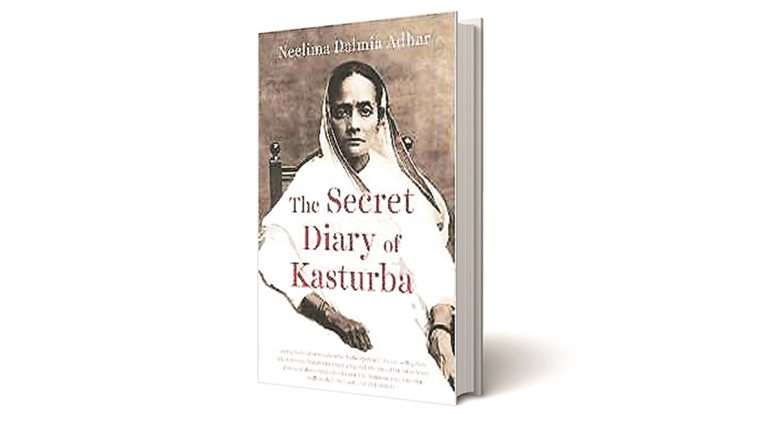
Name: The Secret Diary of Kasturba
Author: Neelima Dalmia Adhar
Publisher: Westland
Pages: 393
Price: Rs 699
In giving voice to a person who is simultaneously a household name and a mystery and fictionalising her life, The Secret Diary of Kasturba takes a bold step. Written as a series of journal entries by Kasturba Gandhi, the book is also about the intimate, familial side of a man who has largely been mythologised as “the Father of the Nation”.
Without treating anyone with undue reverence — be it the titular character, her husband or their children — the book imagines the turbulent life of the Gandhis. Dalmia Adhar adheres accurately to history in terms of names, dates and encounters, but fills in the gaps of Kasturba’s story.
She reimagines Gandhi as the truant boy, the teen struggling with desire and guilt, the cold, dominating husband
who could, at times, be cruel and violent, the father who saw every Indian as his child. We also see moments where
Kasturba wonders at Gandhi’s ability to treat his children with his own brand of home medicine, at the way he
picked up his share of household chores and the rare glimpses of familial affection.
The epistolary form of the book is, without a doubt, one of its selling points. It allows readers to catch glimpses
of Kasturba’s own evolving mindset, and also reveals her set of biases — such as an early reference to those who
clean toilet pots as “wretched cleaners” with “ill-omened faces”.
Considerable portions of the book tend to read as a passive first-person narration of Gandhi’s history. This is inevitable, as little is known about Kasturba or her role in the freedom struggle beyond those few moments in the spotlight.
The book’s real strength lies not in dealing with history but when it describes his personal interactions. The
relationship between Gandhi and his eldest son Harilal is portrayed in a heartbreakingly convincing manner. It is perhaps the strongest example of how Gandhi’s eyes — fixed constantly on the horizon — many times ignored those right next to him.
The omniscient undercurrent to the writing is often off-putting. Within the first few chapters alone, there are numerous sentences in the vein of “If only I knew then…” Not only is that repetitive but it also takes away the chance to discover things as Kasturba did — at a more organic pace. There are also times when the narration changes abruptly to an intimate perspective of Harilal, which can be jarring.
The decision to see Gandhi’s story through to the end – despite the fact that Kasturba passes away before — is befitting, given that their stories were too deeply intertwined to separate. In giving voice to the voiceless, even if through a fictional undertaking, the author makes the story of two important historical figures less one-sided, and opens the field to a debate on not just Kasturba, but many such figures.

 3 min read