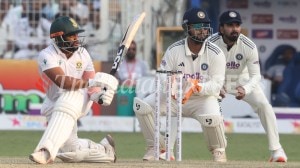
Simon Harmer kept it simple to script South Africas famous win over India
Tap for summary
 3 min read



THE latest high-ranking politician to join India’s unofficial censor board is Punjab Chief Minister Amarinder Singh. After The Da Vinci Code had finally been cleared for public release by the official Censor Board — with the requested disclaimers — and after the country moved on from that controversy, Punjab’s home department suddenly discovered that the screening of the film could cause “violent confrontation at some places”. If such was indeed the assessment, then the state’s home ministry would have been better employed putting measures in place which would protect the security of those who wished to see the film in the state, rather than take the easy way out by ordering a ban. It is the Punjab chief minister’s job to protect basic freedoms. It is not his job to ban films. Or could the supposed fear of the “threat of violence” be a red herring, and that the real reason for banning the film were electoral considerations, with polls coming up next year?
Censoring, banning, and threatening have become the new politics of the age. The BJP is on the warpath over the banning of The Da Vinci Code in Punjab. This, of course, is the height of hypocrisy, given the fact that the party in Gujarat has just ensured that the Aamir Khan-starrer, Fanaa, will not be shown in the state because the actor’s statements on the Narmada issue are perceived as hostile to the state. Neither have the Gujarat chief minister or most senior BJP leaders in Delhi come out against this wholly unacceptable, totally misguided position. From Singh’s Punjab, to Modi’s Gujarat, we go to Mulayam Singh Yadav’s Uttar Pradesh. Not so long ago, we had Yaqoob Qureishi, a minister in the Mulayam cabinet, coolly announcing a handsome bounty at a public meeting for the head of the offending Danish cartoonist. Not only did the UP chief minister do nothing to rein in his minister, he did not express the mildest public reproof.
All the three chief ministers cited here are bound by their constitutional obligation to protect basic freedoms in the country. The highest court in the land has observed that the state cannot plead its inability to handle hostile audiences and curb its citizen’s right to free expression because this right is a constitutionally mandated one. It will be doing a great disfavour to Indian democracy if public order is procured at the price of indiscriminate bans.