Journalism of Courage
 4 min read



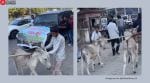
AHMEDABAD, JAN 16: For a much-blighted Ahmedabad, this was just what the doctor ordered. The effect was most strikingly evident in Mohammad Farid, a rickshaw driver from the communally sensitive Bapunagar area. As dancers from eight countries paraded through the city’s streets, he joined them, if only briefly, his impromptu jig proof that culture is, well, alive and kicking here.Mahotsav 99 had come to town.
Coming after a gap of 15 years, the Second International Folk Dance Festival with troupes from Greece, Hungary, Italy, Mongolia, Sri Lanka, Czech Republic, Yugoslavia and Uzbekistan, along with various groups from India will be doing much more than entertaining; they will be coming — at perhaps a very opportune moment — with a message of brotherhood and peace. The opening parade today–where thousands joined in and more than a lakh looked on as the multi-hued foreigners performed while perched on top of camel carts or on the streets–so overwhelmed Additional Police Commissioner V V Rabari that hetermed it a miracle. “I hadn’t seen something like this in my entire life,” he said, while keeping a watchful eye on thousands of bystanders as the procession passed through some of Ahmedabad’s poorest and most sensitive localities. “That’s the whole idea,” says Mallika Sarabhai, architect of the week-long festival that is here as part of the Conseil International Des Organisations De Festivals De Folklore’s attempts at bringing world culture to those without the means to travel, and to create a greater understanding among different peoples.“The festival is here to foster world friendship, when the very idea of friendship and camaraderie is fast disappearing,” says Sarabhai, adding, “Let dancing that comes from the people, unite the people and remind them that all is not dull and defeating.”Till 1982, the only Asian countries in the CIOFF Council were Japan and South Korea.
In 1883, however, India was officially elected to the Council with Mallika Sarabhai as the CIOFF national representative. Thenext year, the Darpana Academy of Performing Arts organised Mahotsav ’84, a festival that was the first of its kind, not only in India but in Asia, and was witnessed by around four lakh people all over the State. This time, the target is five lakhs. Around 50,000 people will be witnessing the programme every day, while groups from six other guest countries drive down to villages, towns and factory townships to perform for them. During the daytime, the groups will visit schools, colleges, slums, hospitals, orphanages and even jails, conducting workshops and giving informal performances aimed at increasing understanding through interaction. And the entire festival and the performances will be telecast in 57 countries across the globe.
While Bulgaria pulled out ostensibly because of the “existing situation in the country” (read Gujarat) the mood in the remaining camps is upbeat and unbridled. The first ones to arrive here, the Sri Lankans, are finding the build-up to the excitement ahead hard to contain.Their leader Anoma Kanthi Doloswala of the Ruhunu Ballet, an Indophile who shaved her head on her earlier trip to Tirupati, can’t wait for the show to begin. “Only art and, therefore, a greater understanding of human nature can eliminate the negative elements around us,” she says.Theologi Maria, president of Association Folklorique from Greece, takes you aback when she speaks of the “similarity between Greek and Indian cultures, especially in music where the notes are similar.
You will see.” And in a heartening gesture — one, incidentally, that goes back in Gujarati tradition through the centuries — several families have volunteered to accommodate the visitors. A piquant counterpoint to the near-xenophobia displayed in some parts of the State, these families — cutting across all strata of the local community, artists and academics, bureaucrats and businessmen — have, in their commitment to Darpana, promised to make the 250-odd foreign guests feel completely at home and serve them the best Gujaraticuisine. That perhaps, is what the festival is all about — an exchange of emotions and ideas. So while Gujarat will pulsate with dance and music, and cultures will mix with cultures, the festival, a journey celebrating life itself, will defy the human logic of barriers.