Journalism of Courage




JERUSALEM, NOV 3: The Israeli Security Cabinet decided late on Thursday to give the Palestinian authorities 24 hours to impose an agreed ceasefire, Israeli radio reported.
A car bomb in West Jerusalem earlier on Thursday, which killed two Israelis, had appeared to explode the truce deal struck just hours previously by Palestinian leader Yasser Arafat and former Israeli Prime minister Shimon Peres.
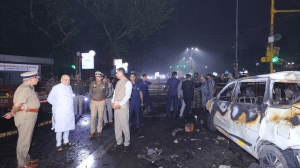
The Israeli police said it was mobilising forces in Jerusalem ahead of the Muslim holy day on Friday. Since the Israeli-Palestinian violence began five weeks ago Fridays have seen some of the most serious clashes. Panic struck a popular market in Jewish West Jerusalem Thursday when the explosives-laden car blew up, wounding at least nine people besides those who died.
The blast brought the death toll from the five weeks of violence to 174. One of the victims of the attack was the daughter of Yitzhak Levy, leader of an Israeli party that is the mouthpiece for Jewish settlers living in the West Bank and Gaza Strip.
According to preliminary police reports, the bombers used a stolen Mazda car for the attack, loading it with 15 kilograms (33 pounds) of explosives packed with nails and attached to a timer. A militant group opposed to the peace process, Islamic Jihad, claimed responsibility for the blast — the first deadly attack in Jerusalem in two years — and said the perpetrators had escaped.
Hundreds of people, including ministers and former prime minister Benjamin Netanyahu, attended the funerals of the bomb victims in Jerusalem. Israeli Prime Minister Ehud Barak met late on Thursday with his Security Cabinet to decide on the next move in the bid to breathe life into the peace process, the radio reported.
The Cabinet met to decide on possible reprisals against the Palestinians, but decided to grant the 24-hour delay in the hope of salvaging the ceasefire deal. The radio said Barak also held talks with a number of government officials and senior Army and security service figures.
Meanwhile the clashes continued. “There was automatic arms fire on Thursday evening in practically all Gaza Strip settlements, notably at Kfar Darom and the Gush Katif settlement, and the Army responded,” said a military source.
Israeli troops also fired in around Jenin, Tulkarem, and near Nablus, he added. Palestinian witnesses said the Israeli Army had launched rockets late on Thursday against houses in the Khan Younes refugee camp in southern Gaza. Israel’s Deputy Defence Minister Ephraim Sneh, who blamed the Palestinian Authority for the bomb blast, said the attack would not affect the truce.
Israeli President Moshe Katsav was less conciliatory, accusing Arafat of bearing “part of the responsibility” for the attack. Palestinian International Cooperation Minister Nabil Shaath telephoned Israeli Prime Minister Ehud Barak to express his condolences and said the Palestinian authority had ordered its police to arrest the perpetrators.
Later, asked for the Palestinian position on the attack, Arafat said, “We are completely against it.” For its part, the Israeli Army said it had implemented measures stipulated in the truce deal. It said armoured vehicles in the West Bank had returned to their bases and that heavy vehicles in the Gaza Strip had moved and were no longer positioned along the principal routes.
It said the Army has also evacuated a position established several days ago on the main access road between Gaza and Israel. Separately, though, Israel ordered the Palestinian airport, situated in the southern Gaza Strip town of Rafah, to remain closed “until further notice”, an airport official said.
On the Palestinian side, witnesses said police were out in force in flashpoints across the Gaza Strip to prevent demonstrators from clashing with Israeli troops. Against the background of this activity, there was disagreement over what the Israelis had said was to be a simultaneous joint annoncement of the truce accord.
The Palestinians issued a unilateral statement that said in part that “there was an understanding … for the two sides to exert utmost efforts to implement the understanding reached at Sharm el-Sheikh and the statement read by US President Bill Clinton”.
The statement also called on Palestinians to continue popular demonstrations but “in a peaceful way”. Sneh, however, said Barak would only make a declaration if it were done simultaneously with Arafat.
Asked to comment, Arafat said, “We are still waiting for the official response of the Israeli Government, especially after our statement in the name of the Palestinian leadership.”
The US President, meanwhile, appealed for the two sides not to let the bomb blast derail the tenuous new truce deal. “This morning we were reminded once again in Jerusalem that there are those who seek to destroy the peace through acts of terror. This cannot be allowed to prevail,” Clinton said in Washington.

 5 min read