Journalism of Courage
 6 min read



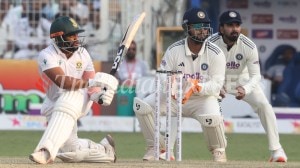
So India and Pakistan finally met at The Chepauk. They are in flannels, not war gear. That is in abundance outside the stadium. Wireless vans, lathis, rifles and the rest of it. The men inside will look for the runs, those outside will scan for trouble-makers. If there’s any problem, it’s more likely to be on the score-board than elsewhere. It’s either them or us; at best it will be a draw. Sometimes, cricket becomes war.
Then onward to Ferozshah Kotla where the men in white will still play ball but under the added security cover of 20 snake-charmers. What fun! It’s understandable that the Delhi police feels constrained to recruit ancient practitioners to beef up ultra-modern security systems. After all, which state-of-the-art device is designed to combat a threat from snakes freely moving in a stadium? So, don’t be surprised if your television screen suddenly shows a “sapera” in the security pack. Sometimes, cricket turns into a farce too.
It’s all part of the game, as cricket commentators– expert or otherwise — love to remind us ad nauseum during a match. For added effect this time and for the benefit of us dim-witted, they might be tempted to say that sport finally won over politics. Wow! Those who threatened a civil war over a cricket series will, in all possibility, be glued to their television sets too. Those who brain-stormed for the last-minute face-saving political solutions will pat themselves for rescuing the Government of India, no less. Indo-Pak cricket is on. All’s well with the world.
Or is it? Something’s seriously not well with mine. Something snapped in that week when so-called miscreants (a superbly sanitised word) ransacked the office of the Board of Control for Cricket in India (BCCI) at Brabourne Stadium, damaged national treasures, threatened officials and walked away with spring in their strides. This part of the story is now assuming legendary proportions. It is, after all, a first in the annals of cricketing history in India, may be in the cricket-playingnations of the world.
What disturbed my world was not just the attack but what followed. Rather what did not follow. No cricketer worth his cap made a noise. No cricketer stood up to protest this brand of vandalism. No cricketer — past, present, famous or otherwise — came forward to criticise the strong-arm tactics.
Cricketers, especially the legendary ones who now adorn commentary boxes and newspaper columns, did not even take telephone calls from journalists who called them for comments. Those who obliged, pleaded to be left alone. The few who found courage to speak up avoided mentioning the Shiv Sena anywhere in their statements. Perhaps the only exception was Dilip Sardesai who called it “goondagiri”.
Mumbaiites do not just eat, sleep and drink cricket; they worship the game and the men who play it. Yet, cricketers based in Mumbai skirted the issue completely. “Don’t bring me into this,” was the common refrain. I know that my colleagues in the sports department heard this from no lessthan ten top cricketers, past and present. Extended conversations but no comments. They were unwilling to offer even sanitised comments. This, when the state home minister had spoken of the identity of the miscreants.
If cricketers did not express sorrow or regret about the BCCI attack, if the damaged trophies did not move them enough to speak, if nothing that happened about cricket in the recent weeks stirred them from stupor, I wonder what will. It pained to see a smug Sunil Gavaskar on television evading a pointed question on the BCCI attack. The hero who had just launched his CHAMPS Foundation said: “My foundation has nothing to do with it”. Gavaskar with Dilip Vengsarkar, Ravi Shastri, Mohinder Amarnath, Sandeep Patil — all Mumbaiites — were part of the glorious 1983 team that lifted the Prudential Cup. It lies ruined now.
This isn’t about cricket alone. Now it happens to be cricket. Yesterday was some other issue; tomorrow will be yet another. What matters is that fewer and fewer people of afraternity will speak up for what they believe is right; speak against what is wrong. Cocktail circuit chatter is fine; it is safe. Public stand, public condemnation comes with a price. Who wants the trouble? Let’s do Tch Tch and smile. Try as I did, I could not forget the cliched Pastor Niemoller lines — They came for the Jews, I did not speak up because I was not a Jew….And then they came for me and there was no one left to speak for me. At least out of a self-serving interest, for the sake of the game, Mumbai cricketers should have spoken up. They could have; they chose not to. Why the vow of silence? Your guess is as good as mine. But let’s not point fingers at the cricket fraternity alone. The vast sports fraternity was quiet too. The cultural elite were silent. The intellectuals made feeble noises. The commercial elite, as usual, kept their counsel. All those who should have spoken up, did not. They simply chose not to. The handful who raised a voice got the short end of the police lathi.
It’s the conspiracy of silence, someone whispered. Another cliche, I shrugged.
It’s not so easy to shrug away what stares in the face. Mumbaiites, at least those with recognisable names, have lost their ability to speak up. To stand up and be counted. To raise a voice and rally around an opinion against any kind of barbarism. Those who speak up are condemned as mad, or worse, suicidal. Nothing and nobody is worth making a noise about. Mumbai lost its soul in the 92-93 riots. Now, it has lost its voice too.
(Smruti Koppikar is a special correspondent with The Indian Express)