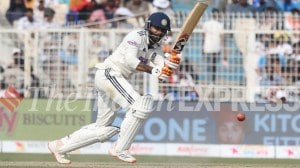
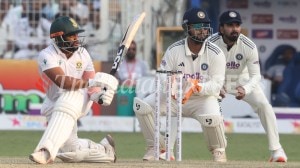
Simon Harmer kept it simple to script South Africas famous win over India
Tap for summary
 4 min read



• Begin at the beginning: where does the term ‘office of profit’ come from?
The phrase occurs in Clause (1) (a) of Article 102 of the Constitution, which states that MPs shall be disqualified “if he holds any office of profit under the Government of India or the Government of any State, other than an office declared by Parliament by law not to disqualify its holder”…
In order to give effect to this Article, the Parliament (Prevention of Disqualification) Act was passed in 1959. Section 3 of the Act allowed for certain offices of profit which do not attract disqualification. Over the years, successive governments have added to this list. When Pranab Mukherjee was appointed deputy chairperson of the Planning Commission under the Rao government, the post was exempted. The UPA government made a cardinal slip — of not including the office of chairperson of the National Advisory Council (NAC) in the list of exemptions when Rae Bareli MP Sonia Gandhi was appointed in that post.
• Will the JPC finally define “office of profit”?
Hopefully, because no one has defined it so far. The Supreme Court has ruled in the Ashok Kumar Bhattacharya vs Ajoy Biswas case that interpretation will be case-specific. If the court’s pronouncements over the years were to be collated, four broad criteria emerge. Office of profit is one in which a) the government controls appointments, removals, performance and functions; b) the holder draws any remuneration apart from compensatory allowance; c) the holder can exercise executive, legislative and judicial powers; d) the holder can wield power, exercise patronage.
• If JPC defines it, will the drama end?
Probably not because specific interpretations are what started the controversy: a disqualification petition against the SP’s Rajya Sabha MP, Jaya Bachchan, for holding an ‘office of profit’ as chairperson of the UP Film Development Council. President Kalam, after consulting the EC, approved the disqualification. Amidst the fractious politics triggered by this development, and with numerous disqualification petitions against MPs of various parties, genuine panic set in.
• How did the UPA government react?
It decided to bring in an ordinance to prevent the Office of Profit guillotine falling on its MPs, most notably Congress President Sonia Gandhi – a story Express broke. The outrage over this move sparked the government’s decision to adjourn Parliament sine die on March 22. The Cabinet chose the easiest way out of the mess by deciding to amend the Parliament (Prevention of Disqualification) Act and expand the list of offices that are exempted under it. When Parliament was reconvened, the amended bill bailing out over 50 MPs across party lines, was passed. When it came to President Kalam for his approval, he returned it to Parliament for reconsideration.
• What were the President’s concerns?
He wanted the Bill to be reconsidered in the context of a “settled interpretation” of the expression ‘office of profit’ in Article 102. Adding that the issue called for comprehensive and fair criteria applicable across all states and UTs in a transparent manner. Among other concerns, he also wanted Parliament to consider whether an amendment seeking to be applicable retrospectively, is indeed sound in law. Under Article 11, the president may return a bill once. If it is passed again, he has no power to withhold his consent to it. Parliament cleared the bill and has sent it again to the president. He has so far not moved on the issue.
• So where do things stand?
The Lok Sabha has appointed a JPC to suggest a comprehensive definition of office of profit — in deference, it would appear, to the president’s concerns. However, this has nothing to do with the bill passed for the second time and awaiting the president’s assent. Parliament can’t appoint a committee to look at a bill already passed. So MPs affected by the controversy and taken care of in the amended bill won’t have to worry about the JPC report.