Journalism of Courage


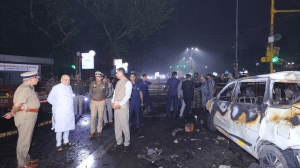
At first glance,Dera Sachkhand,tucked away at one end of village Ballan,off the Jalandhar-Pathankot highway,looks like a white domed hideout of normality. On the way to the dera stand burnt bogies of a train,still smoking at Jalandhar Cantt Railway Station,several charred vehicles not yet cleared from the highway,rows of silenced markets and shuttered shops in a city under curfew.
Initial estimates are already in of the enormous damage to public and private property ever since the ghastly shootout in Vienna,allegedly by radical Sikhs,that injured the deras head,sant Niranjan Dass and killed his second-in-command sant Rama Nand. The Doaba region bore the brunt of the violent reactionJalandhar alone saw 123 vehicles set ablaze.
Punjab is the state with the highest percentage of Dalits in the countryabout 29 per cent,according to the 2001 censusand Doaba is home to the highest concentration of Dalits in the state. A majority of the Dalits in Doaba belong to the Ravidasiya sectthey are followers of the 14th-century Bhakti saint,sant Ravidass. Dera Sachkhand Ballan is the largest dera of the Ravidassis in the region.
Inside the dera complex,filled with strains of devotional music,followers sit quietly in the courtyard facing the multi-storeyed building that has flats for NRI devotees. Dera Sachkhand has zealously spread out abroad. The Vienna visit ended in tragedy,but frequent trips to countries all over the world are a matter of routine for its sants; generous donations flow in from abroad and help run its charitable hospitals and schools. They also helped set up the hi-tech studio in the dera premises from where live telecast of the satsang is beamed to several countries and a regular weekly progamme is produced for Doordarshan.
On a closer look,the deras calm appears stretched a little too tight. The first indication comes from dera general secretary SR Heer. In between receiving a steady stream of grim-faced political delegations from the states two main parties,the Shiromani Akali Dal and Congress,he says,It was an incident in Vienna. There is no tension here. We have issued an appeal to maintain peace. All parties come to us but we try our best to keep a distance from every party. We dont want any conflict. He adds,We dont advise media persons to talk to anyone else at the dera.
But among the assembled followers,the crime in Vienna has evidently touched off a broader resentment. We are poor,we only had our guru. Now he has been shot at, says Nirmal. We used to come here every Sunday,but since the murder we have been coming every day.
This is happening to us because our community is making attempts to uplift itself, says Surinder Kaur. They are against the deras. Why do you worship a living guru,they ask us, she says.
It is a fight for equality, says Parvesh,school teacher. The dominated community is attempting to rise and the dominant community is fearful of its rise.
Basically,in the shadow cast by the murder in Vienna,an older narrative is once again rising to the surface: the Jats-Sikhs have enjoyed a virtual monopoly over land,political power and management of religious places in Punjab. But they are increasingly confronted with,and are seen to be intolerant of the successful efforts of the Dalits to pull themselves up,by embracing opportunities of educational and economic mobility. The attack on the Dera Sachkhand,this story goes,is another example of this intolerance.
At Boota Mandi in Jalandhar,Dalit resentment is more articulate and less circumspect than it is at the dera. This is where the Ravidassis lived and worked when they first moved into the city from the surrounding villages. A few of them subsequently spread into the citys more posh areas. But Boota Mandi is still home to some of the more affluent members of the community,many of them engaged in the leather trade. It is also the nerve centre of their political organisation and mobilisation.
Manohar Lal Mahey runs a successful leather business and the Vigilant Brotherhood (International). This is not an internal matter of the Sikhs, he says. After the social movement in the 1920s led by Mangoo Ram Mugowalia,our community got itself enumerated and registered by the British government as ad-dharmi in the census of 1931. The ad-dharmis say they are neither Hindu nor Sikh,but the original inhabitants of India.
Over the years,the movement consolidated. In the Doaba region,it grew under the unifying symbol of sant Ravidass. It found a spiritual home in the dera; politically,it veered towards Ambedkar-ism,though that did not translate into any significant tilt towards the BSP.
What binds the Ravidassis to the Sikhs,however,is the fact that they also worship the Guru Granth Sahib because sant Ravidasss baani or teachings are enshrined in it. Forty shabads and one shloka of sant Ravidass have been included in the holy book of the Sikhs.
But the powerful link that binds the two communities now threatens to tear them apart. Earlier,the Ravidassis would observe all their religious occasions in the presence of the Guru Granth Sahib in the Sikh gurdwara. But in the last few decades,first at home and then abroad,as the community started building its own gurdwaras or gurughars,controversy started brewing,among other things,over the fact that the Ravidassis place the portrait of sant Ravidass alongside the Guru Granth Sahib.
Mahey himself is an example of the kind of mobility that a small but visible section of the Ravidassis has achieved over the years. When his family came to Boota Mandi in 1925-26,it did not have the right to property; at that time,only the cultivating class could own land. The extended family bought land in Boota Mandi without formal legal ownership. The leather market came up in Boota Mandi in 1939-40 and flourished due to the demand for boots by the British army before and during World War II. Then,in the early 1960s,helped by a sympathetic passport officer of their community,members of Maheys family were among the first to go abroad.
In 1994,Mahey took VRS from his job in a bank to take charge of the familys leather business. Today,his office is in Boota Mandi,but his home is in Guru Tegh Bahadur Nagar,one of Jalandhars most posh localities.
The conflict that is now coming to the fore started with the diaspora,says professor of sociology at Guru Nanak Dev University,Paramjit Singh Judge. It was triggered in Sikh gurdwaras in English-speaking European countries by fundamentalists associated with the Khalistani movement.
What makes the Dera Sachkhand a target for the hardliners,he says,is that the Ravidassi movement is not outside of the religious parampara or tradition,but instead partakes of it. The ad-dharm Dalit samaj is well-organised; it has also been inventive in giving itself its own narrative and ritual that can often be aggressive.
Judge believes there is an immediate political context to the current face-off. After the Lok Sabha election,he says,a murmuring could be heard that the deras had voted for the Congress. But after the violent reaction to Vienna,everyone realises that a direct confrontation must be avoided in Doaba. Jalandhar,for instance,has 37 per cent Dalits. To win Doaba,you need to make coalitions.
Others point to the SADs recent efforts to project a more inclusive and secular identity and wonder what the present face-off could mean for that project. In the last assembly elections,they point out,the SAD had given many more tickets to the traditionally Congress-supporting Ravidasiya community in Doaba. Recently,it has imported at least two prominent Dalit leaders of the region,Pawan Kumar Tinu and Avinash Chander,from the BSP. A tug of war has been on between the Congress and SAD for the vote of Doabas numerically significant community.
For now,the face-off has triggered more of the usual Akali-Congress blame game. Gurcharan Singh Channi,district president of SAD (urban),says,Some third force wants to disturb the peace in Punjab. This suits a third party. It suits the Congress. The day the violence took place,paramilitary forces were sent in late. Congress leader Chaudhry Jagjit Singh,a former cabinet minister,retorts: The SADs approach to Dalits has never been inclusive.
But for many Punjab watchers,the most significant question framed by the present controversy may be this: how will the Dera Sachkhand episode play into a long-running theme of domination and control in the state,featuring the SGPC? It is when Sikhism became more and more defined by its exclusions,that the deras gained ground, says Rajivlochan,professor of contemporary history in Punjab University. In the recent past,the clash between mainstream Sikhism and the deras has taken different formsthere was the Jat-Dalit conflict over the management of a gurdwara at Talhan and the Dera Sacha Sauda controversy.
The SGPC may have to take some responsibility in driving away those who demanded greater participation, concedes Jagjit Singh Gaba,SAD leader and president of the Guru Tegh Bahadur Nagar gurdwara in Jalandhar. But,he adds,These poor people dont know and our fault is that we have not been explain it to them. Our gurus fought Brahmanvaad,they promoted equality.
At the heart of the tension in Punjab today is a dream and a hope of equality that was as much the promise of the Sikh religion as it is the leitmotif in sant Ravidasss teachings. Among his 40 shabads and one shloka in the Guru Granth Sahib,is Begumpura. The spirit of the verse is: Begumpura is the name of the city where there is no place for sorrow/There is no suffering or anxiety,no fear or downfall/Begumpura is the city where there is sovereignty of god/Where there is lasting peace and safety for all/ All are equal,no one is second or third in Begumpura/Ravidass the shoemaker is a friend of all who are citizens of Begumpura.

 10 min read