Journalism of Courage
 2 min read



Concerned with the growing threat of war, Health Minister C.P. Thakur convened a high-level meeting to discuss the state of health infrastructure preparedness.
In the meeting held yesterday, the minister reviewed the existing infrastructure and also how soon it can be mobilised to cater to an emergency situation. The response, the minister said to The Indian Express, needs to be adequate enough to tackle both conventional and non-conventional attacks.
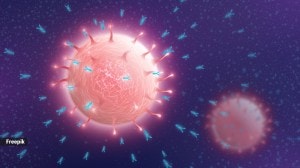
So it is not just the existing hospital bed-strength, availability of blood and other life-saving material and trained staff that the ministry would have to monitor but also ways to treat radiation attacks and effects of biological weapons.
The ministry has already identified centres that would monitor the modes of biological attacks, isolate target populations and organise treatment in terms of figuring out the appropriate antibiotic treatment in case of such an eventuality. The National Institute of Communicable Diseases (NICD) and AIIMS are two of the prominent nodal centres identified for the purpose.
‘‘The idea is to respond to such situations as induced epidemics. One has to identify the pathogen and isolate the target population because if it is a contagious infection, and during the incubation period of the pathogen the victim is not put in quarantine, the infection can become uncontrollable,’’ informed a Health ministry official.
‘‘I don’t know if there would be a war. But we have to look out for such possibilities. I reviewed the state of preparedness yesterday. We’re going to call another review meeting in a day or two,’’ Dr C.P. Thakur said.
According to Thakur, India will have to watch out for a radiation attack because no matter what the state of preparedness be, such attacks can be dangerous.