6 min read


© The Indian Express Pvt Ltd



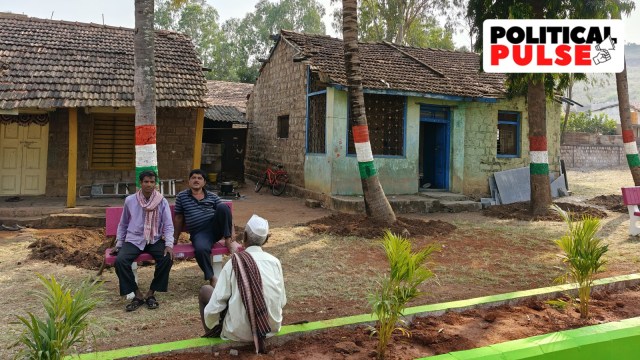 Over 200 of the 500 families in Hudali are associated with khadi. No machine is used in production process. (Express Photo by Asad Rehman)
Belagavi was buzzing with activity Wednesday as the Congress prepared to celebrate the centenary of Mahatma Gandhi’s appointment as party president in the city. Around 30 km away, it was life as usual in Hudali, a village that takes pride in silently following the Mahatma’s teachings.
Mahatma Gandhi spent a week in Hudali in 1937 and held several meetings on the invitation from freedom fighter Gangadharrao Deshpande — the “Lion of Karnataka” — who hailed from the village.
The story of the Mahatma’s visit has been passed on from generation to generation. Even the details — how during his visit from April 17 to April 24, 1937, huts were built but got ruined due to rain; and how he walked in the rain and stayed at the Kumari ashram in the village. “I heard it from my father who heard it from his mother,” said Afroz Mujawar (45), a sugarcane farmer as he sat at a coconut water stall in the village.
He expects that someone from the Nehru-Gandhi family as well may visit his village this time. He said he heard that one of them might. “The Mahatma came here in 1937, so maybe they too will come,” Afroz said.
While the ashram where the Mahatma stayed was lost to illegal encroachment, the Karnataka government built the Gandhi-Gangadhar Rao Smarak in 1982 — where renovation work was in progress on Wednesday. The building — a small one with some huts on both sides — has a gallery with the Mahatma’s photographs in the village and elsewhere, and a small section where khadi is woven by women.
While Hudali has a total of 500 families, more than 200 are associated with khadi.
 The village has 60 per cent of Lingayat population, 30 per cent from Scheduled Castes and Scheduled Tribes, while the remaining 10 per cent are Muslims. (Express Photo by Asad Rehman)
“This village knows the value of khadi, and has been making it without any electrical machine — much like Gandhiji did,” said Raghvendra Hammanavar (44), secretary of the Khadi and Gramodyog Sahkari Utpadak Sangh Limited, Hudali that looks after the memorial, and the khadi production in the village.
Hammanavar said the cooperative society trades in approximately Rs 3-4 crore of khadi products per year.
The workers who weave the cotton into threads, and from threads into cloth, make Rs 150-200 per day depending on their output.
“Yes, the money is not much. But what will we do with money? We are doing what Gandhiji taught us to do — using the charkha,” said Shireen Altaf Darwai (36), as she separated cotton at the factory in the memorial complex.
The village also has a cloth mill, around 500 metres from the memorial, where thread is taken from the warehouse and woven into cloth which is then sold at four outlets across Karnataka, one of them in Hudali. All the work is done by hand, no electrical machine is used through the process.
Not just khadi, which became a rallying point during the Swaraj movement of the freedom struggle, this village also follows other principles advocated by Mahatma Gandhi. The village doesn’t have a single liquor shop, doesn’t sell cigarettes or bidis, hasn’t seen communal or caste violence, and there is no segregation of houses based on caste and community.
C B Modagi (84), a farmer visiting the memorial on Wednesday, said: “I am quite old, and in all my life, this village has not seen any violence. We live in peace and that is because we associate ourselves with Gandhiji. This village barely sees any migration for work like other places. The latest generation has started going out, but otherwise we have stayed in the village.”
On his memories of Gandhiji’s visit, Modagi said: “He used to hold daily meetings. He would walk from the ashram to the village and meet people and tell them about the importance of khadi, swaraj and unity. We are still following the principles although the country may have forgotten about them.”
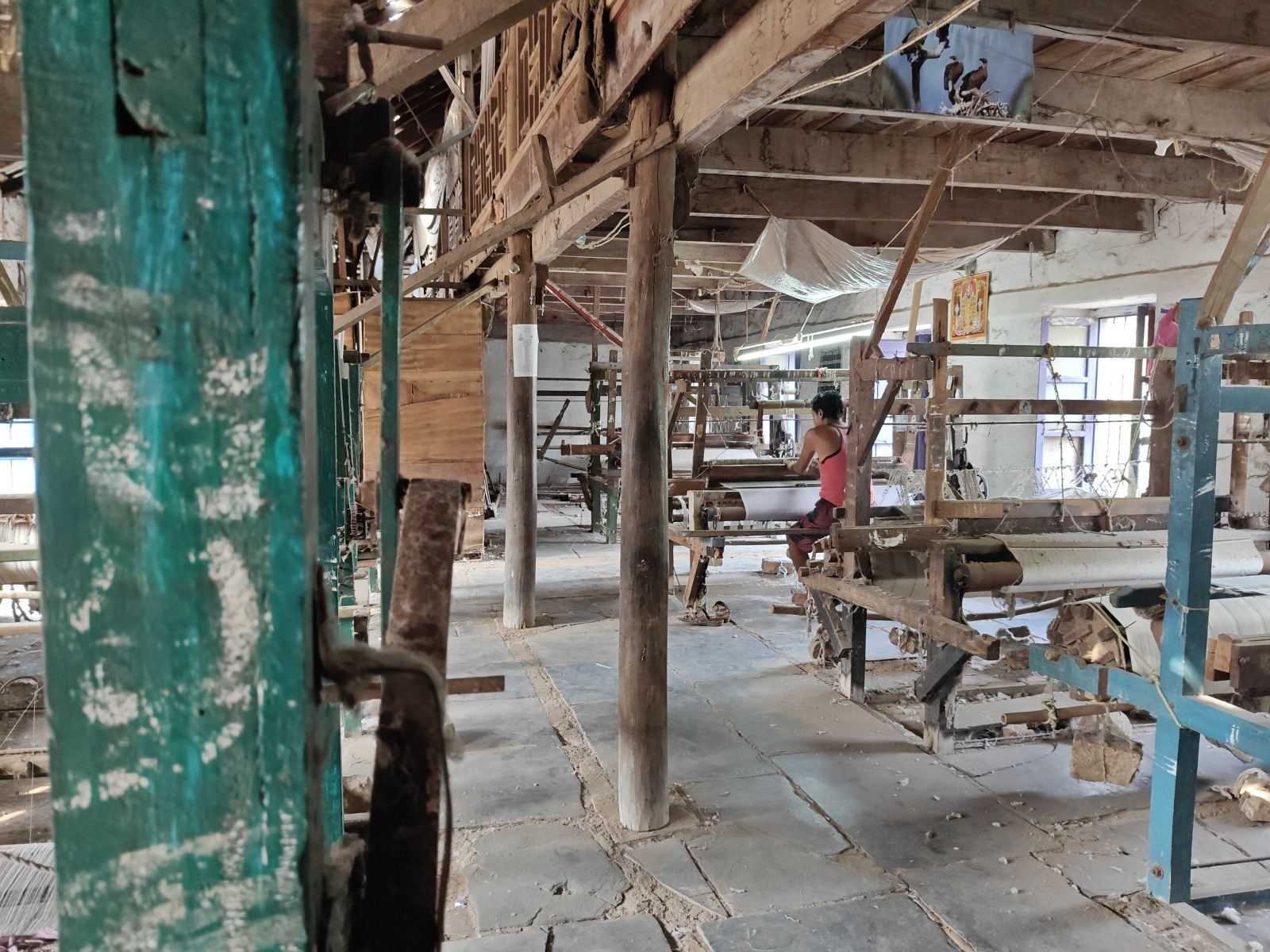 Not just khadi, which became a rallying point during the Swaraj movement of the freedom struggle, this village also follows other principles advocated by Mahatma Gandhi. (Express Photo by Asad Rehman)
The village has 60 per cent of Lingayat population, 30 per cent from Scheduled Castes and Scheduled Tribes, while the remaining 10 per cent are Muslims. Members of the Muslim community said caste and religion are “almost invisible in the village”.
“When we travel outside, people ask us if we are Hindus and Muslims. Then they ask us what our caste is. I have never been asked this question in my village,” said 24-year-old Sathish, a grocery shop owner.
While the khadi industry provides employment to more than 200 families, the remaining work at Belgaum Sugar Private Limited, or are involved in growing cotton, jowar, sugarcane and vegetables.
Rahmatullah J Bandi (46), representative of village head Tabassum, his wife, said: “If you look around the village, you will find some houses with thatched roofs, but most are pucca. This is because we help each other out. No one is too rich, or too poor here. We live here following the principles of Gandhi.”
Asked about a possible visit of Nehru-Gandhi family members — Priyanka Gandhi Vadra or Rahul Gandhi — Bandi said it was a “rumour”. “A month ago, two ministers of the Karnataka government came and sanctioned Rs 4 lakh for upkeep of the memorial and other parts of the village. They said they will visit the village when the Congress meeting happens in Belagavi city. But since then, we haven’t heard anything. We hope someone comes, but even if they come later, we are happy,” he said.
There was no official word yet from the Congress on any such visit.
The Opposition party will be holding an extended session of its highest decision-making body, Congress Working Committee, and a rally in Belagavi on December 26-27 to commemorate the centenary of Mahatma Gandhi presiding over the historic Belgaum session as Congress president in 1924.