2 min read
© IE Online Media Services Pvt Ltd

Journalism of Courage



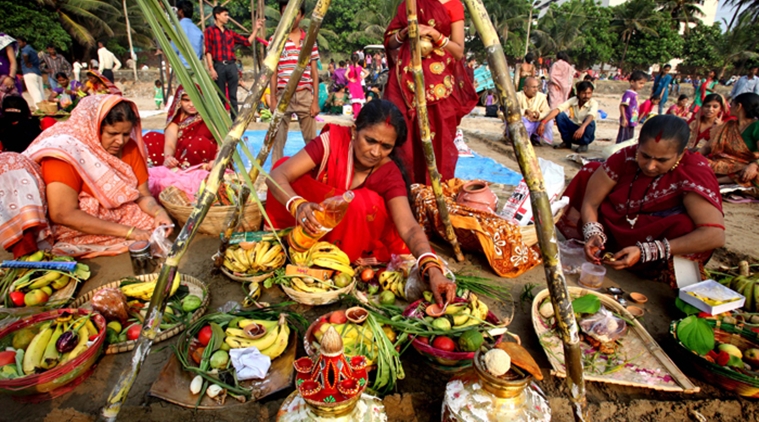 This year the festival of Chhath falls on October 26. (Source: File Photo)
The pujas for Chhath start on the fourth day after Diwali, but it’s on the sixth day that ‘Chhath’ is mainly celebrated. It is an ancient Hindu festival dedicated to the Sun god, and is observed for a period of four days. This year, Chhath, which is the third day of the celebration, falls on October 26. People in the regions of Bihar, Jharkhand and eastern Uttar Pradesh offer their prayers and seek blessings from the Sun god Surya and his wife Usha. (Also read: How is Chhath Puja celebrated?)
The word Chhath translates to ‘sixth’ in Nepali, Maithili and Bhojpuri languages and, according to the Hindu lunar Vikram Sambat calendar, it is celebrated on the sixth day of the month of Kartika. On the first day of the puja, known as the Nahay Khay, people visit the holy water bodies and take a dip, specially river Ganga. Women observe fast and eat only a single meal. The following day, known as Lohanda, fasting without water is observed from sunrise to sunset and is only broken after offering food to the Sun. (Also read: Importance, History and Significance of Chhath Puja)
The third day, known as Chhath, is considered the main day of the festival and a fast without water is observed. Moreover, the fasting continues throughout the night and on the fourth day, Usha the 36 long hours fast is broken. On the fourth day marks the end of the festival and offering are make to the rising sun. Chhath Puja is also known as Pratihar, Dala Chhath, Chhathi and Surya Shashthi.
Muhurat timings:
Sunrise on Chhath Puja Day = 06:28
Sunset on Chhath Puja Day = 17:40
Shashthi Tithi Begins = 09:37 on 25/Oct/2017
Shashthi Tithi Ends = 12:15 on 26/Oct/2017
(Source: Drikpanchang.com)