


© IE Online Media Services Pvt Ltd
Tags:


Braving coronavirus lockdowns and international travel restrictions, London Natural History Museum researchers helped describe 552 new species in 2021.


The discoveries range from the smallest invertebrates of the oceans to the largest predators that ruled Earth millions of years ago.
Dr. Tim Littlewood, the Director of Science at the Museum, notes in a release: “Discovery can be a personal, community or even a global revelation, or just a nudge towards advancing knowledge…It’s a matter of personal and institutional pride that we continue to be at the forefront of recognising and naming new species – especially at a time when we are losing so many.”
Here are five of our favourites (in no particular order):
‘Crocodile-faced’ predators
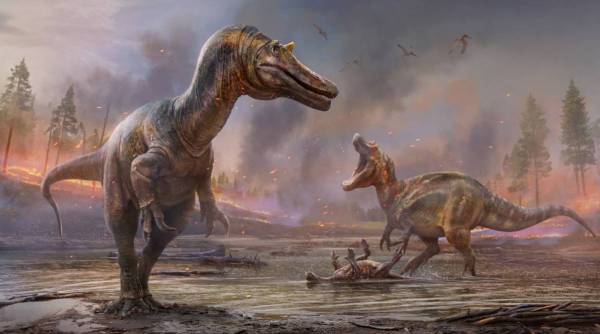
In September, scientists announced that fossils found on a rocky beach in England revealed two new dinosaur predators that lived about 127 million years ago. One was named Ceratosuchops inferodios, meaning “horned crocodile-faced hell heron.” and the other Riparovenator milnerae, meaning “Milner’s riverbank hunter,” honoring British paleontologist Angela Milner.
Click here to read the detailed report
Giant deep ocean scavenger
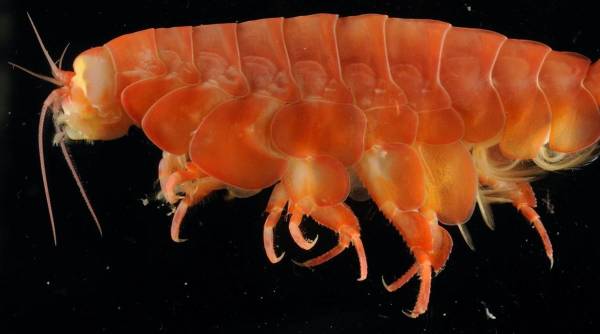
Meet Eurythenes atacamensis, a close relative of shrimps, endemic to the Atacama Trench. It measured more than eight centimeters, making it a giant compared to shrimps. Juveniles and adults of the species were found in the trench between 4,974 to 8,081 meters. The study is a reminder that extraordinary life thrives even in the deepest darkest parts of the ocean, under harsh conditions.
A 1000-legged creature
Deep in a mining region of Australia, scientists discovered a blind millipede with 1,306 legs. Named Eumillipes persephone, it measures 95 mm long and 0.95 mm wide.
“In my opinion, this is a stunning animal, a marvel of evolution,” said study co-author Bruno Buzatto in a release. “It represents the most extreme elongation found to date in millipedes, which were the first animals to conquer land.”
Read the full report here
Moth imagined by Darwin
In 1862, Charles Darwin was sent an orchid from Madagascar which had a long nectar tube of 30 centimetres. He wrote in a letter to his friend: “Good heavens, what insect can suck it!” He speculated that only a moth with an extraordinarily long tongue could reach the nectar.
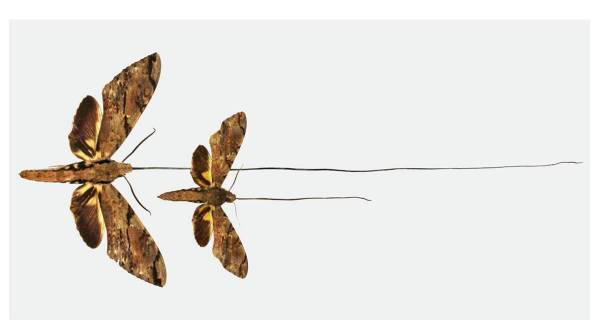
A paper published in September formally identified the moth with a 15 to 28.5 centimetres long tongue and named it Xanthopan praedicta.
Tree named after Leonardo DiCaprio
In 2018, Hollywood actor Leonardo DiCaprio lent his name to a beetle found in Malaysia and now to a tree from Cambodia. Named Uvariopsis dicaprio, the tree is four metres tall, with bright yellow-green.
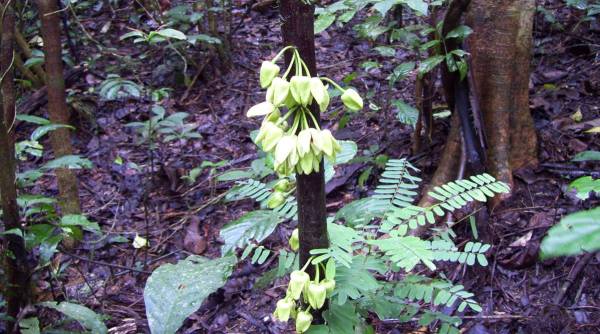
Endemic to the Ebo forest, the newly discovered tree is already in the ‘critically endangered’ category as its habitat remains unprotected and faces threats from logging, conversion to plantations, and mining.
Click here to read more about the tree


