Simon Harmer kept it simple to script South Africa’s famous win over India
Tap for summary

In 2016, the UGC, by way of its "Minimum Standards and Procedure for Award of MPhil / PhD Degrees Regulations," allowed women candidates maternity or childcare leave once during the entire duration of their MPhil or PhD course, for up to 240 days.

Article 299 of the Constitution provides that "all contracts made in the exercise of the executive power of the Union or of a State shall be expressed to be made by the President or by the Governor of the State".

With an intent to replace antiquated colonial era prison laws, the Model Prisons Act 2023 will shift the focus of incarceration from "retributive deterrence" to "reform and rehabilitation".

The Supreme Court underlined 'yawning gaps' in the conviction of Prakash Nishad in Thane. Here's what the case was about.
In 2010, the Supreme Court ruled on the legality and admissibility of narco tests. What was the legal position before that? Is information obtained through such tests valid evidence?

An Ordinance “shall have the same force and effect as an Act of Parliament”. But the government is required to bring an Ordinance before Parliament for ratification — and failure to do so will lead to its lapsing “at the expiration of six weeks from the reassembly of Parliament”.

When litigants or lawyers attempt to deliberately move their case to a particular judge or Court where they think the judgment could be more favourable, they are said to be “forum shopping.”

The case in Delhi HC against BBC has been filed by Justice For All under Order 33 of the Code of Civil Procedure, “seeking permission to file as an indigent person”. What does this mean?
The Constitution itself gives, under Article 137, the Supreme Court the power to review any of its judgments or orders. Can anyone approach the court for a review petition? We explain.

The Centre's ordinance effectively nullifies the Supreme Court's decision granting the Delhi government power over services in the capital. This is not the first time the central government has overturned the apex court's decision. We take a look at some prior instances.
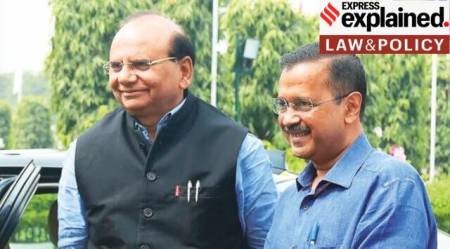
Two Constitution Benches of the Supreme Court have dealt with the issue of the powers of the Delhi government. Both of these judgments involve the interpretation of Article 239AA of the Constitution.

Why is the Kerala HC order important? What has the SC said on mitigation investigations? We explain.

The Centre on Friday promulgated an ordinance to nullify the Supreme Court's decision to give the Delhi government powers over administrative services in the national capital. This order raises several key questions.

The Ordinance creates a new statutory body comprising the Delhi CM and two senior bureaucrats which will make recommendations to the L-G regarding “transfer posting, vigilance and other incidental matters.” Not only can the L-G reject the body's recommendations, the body itself will decide on matters by majority, meaning that two senior bureaucrats could technically overrule the elected chief minister of Delhi.
While striking down the government order, a two-judge bench of the Andhra High Court held that the "tradition of public meetings, processions and assemblies" is "historically, culturally and politically" significant in the country.

Tamil Nadu, Maharashtra, and Karnataka had in 2017 passed amendments to the central law against cruelty to animals in order to allow traditional sports such as the taming of bulls during Pongal. This was done after the SC in 2014 banned jallikattu. A Constitution Bench has now ruled that the changes in the law were valid — but the issue of jallikattu must be decided by Parliament.

While dismissing a batch of petitions which challenged the constitutionality of the proposed amendment that will decriminalise homosexuality in Sri Lanka, the Sri Lankan Supreme Court referred to various judgements delivered by its Indian counterpart.

The bone of contention in the latest Delhi-Centre spat was Services Minister Saurabh Bharadwaj’s decision to replace the Services Secretary, Ashish More.
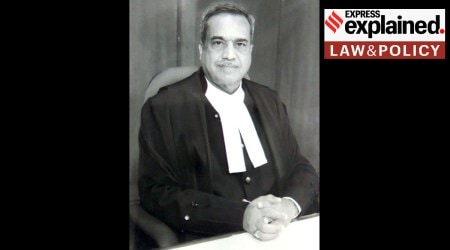
Justice MR Shah retired from the Supreme Court on May 15. In his time at the apex court, Justice Shah has overseen multiple high-profile cases.

Pleas to legalise same sex marriage: Here is a day-by-day account of the arguments before the Supreme Court.
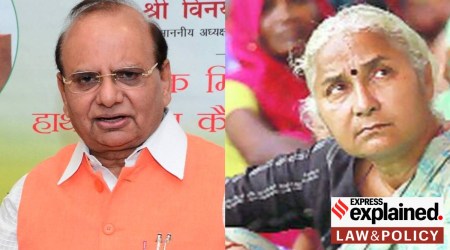
Saxena, who took over as Delhi LG in May 2022, had filed an application before the court on March 1, asking that the proceedings in the case be kept in abeyance for the period he is in the post.

The five-judge Constitution Bench said the decision would further “the basic structure of federalism”.

The court stressed on the distinction between legislature party and political party, and shed light on rules, procedures Speaker should follow.

In the Delhi ruling, the apex court speaks to the Centre in emphasising that principles of democracy and federalism are basic structure of the Constitution.
The Uddhav Thackeray faction had asked for the reference. The Shinde group had cited Nabam Rebia when the crisis unfolded in June 2022 to contend that the Deputy Speaker cannot proceed under the Tenth Schedule against the dissident Sena MLAs as a notice seeking his removal was pending.