Simon Harmer kept it simple to script South Africa’s famous win over India
Tap for summary
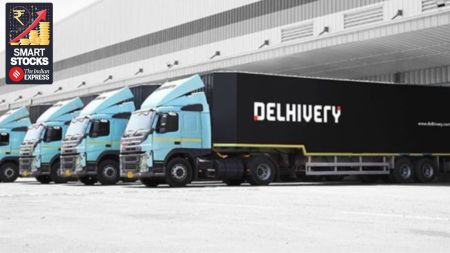
Delhivery has seen its stock fall from Rs 670 in July 2022 to Rs 247 now. But a recent distressed acquisition of rival Ecom Express might just be the catalyst it needs. With a strong balance sheet, growing PTL business, and signs of easing competitive pressure, could Delhivery finally be positioned to deliver value to public investors?
Between 2018 and 2021, Deepak Nitrite’s stock delivered staggering returns: revenue jumped from Rs 1,700 crore in FY18 to over Rs 8,000 crore by FY23, and EBITDA soared from Rs 198 crore to over Rs 1,500 crore. But that momentum has slowed. The stock has fallen in the last three years. The company is now gearing up for its next act: moving toward value-added polymers and specialty solvents. This pivot could make Deepak Nitrite a global player in performance materials. But can it replicate its past success?

In 2018, Berkshire Hathaway invested $300 million in Paytm. It was Buffett’s first direct equity bet in India. Five years later, it exited quietly and at a loss. An earlier insurance venture had also ended without scale. Two bets, no lasting footprint. Was it a missed opportunity — or proof that India isn’t built for Buffett-style investing?
Since 2013, Cholamandalam Finance’s EPS has grown from Rs 0.5 to Rs 41, and its return on equity has remained above 15%. The company has posted an impressive 5-year CAGR of 23% in AUM and 30% in pre-tax profits. But can this stellar performance continue?

InterGlobe Aviation’s share price surged significantly post-pandemic as the airline increased its market share and expanded operations. Can the low-cost airline sustain its growth in the next five years?

In the first nine months of FY25, Voltas grew its AC volumes by 42% and managed to inch its market share back up to around 20.5%. The company’s joint venture in appliances, Voltbek, posted 59% volume growth in December 2024 and crossed 10% market share in multiple categories during the quarter. The signs are clear: Voltas is no longer playing defense. But is this shift durable, or is it just a short-term spike driven by demand?

While most lenders focus on salaried customers in metros, India Shelter has quietly built a high-margin lending machine in small-town India, where few dare to go. Its loan book has grown over 40% year-on-year, return on equity (ROE) stands at 14%, and bad loans are just 1.3%. The market is starting to take note — but the real test still lies ahead.

While many still know LT Foods only for its rice, its stock has told a different story — delivering more than 1400% returns in the last five years. The real question is: Can an everyday food business like this keep growing and continue rewarding its investors?

Bharti Airtel, once on the brink of being overshadowed by the aggressive pricing war in India’s telecom sector, has staged a remarkable comeback. From facing intense competition during the Jio revolution to making strategic moves in 5G deployment, Airtel’s resilience has positioned it as a formidable player once again. A look at how the company regained its ground in the cutthroat telecom market.

From Rs 2,000 crore revenue in FY15 to over Rs 8,000 crore today, KEI compounded its way into investor portfolios and sector leadership. But as we step into 2025, the story is changing. New entrants with strong financial resources and access to raw materials are entering the wires and cables space. So here’s the big question: Can KEI sustain its momentum?

After a meteoric rise between 2021 and 2024, the stock prices of Jupiter Wagons and Titagarh Rail Systems faced sharp corrections. However, a recent rebound has attracted investors’ attention, leading to the question: Can new growth avenues revive their momentum?
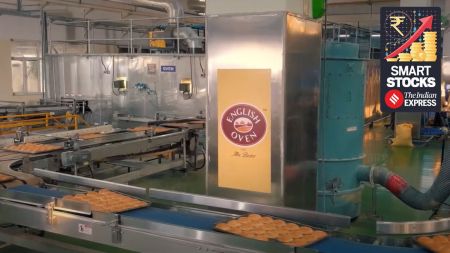
With 46% CAGR over four years, dominant QSR partnerships, and an expanding export footprint, Mrs Bectors Food Specialties, is becoming more profitable with each incremental rupee of revenue. But does the market truly appreciate the scale of what’s being built?
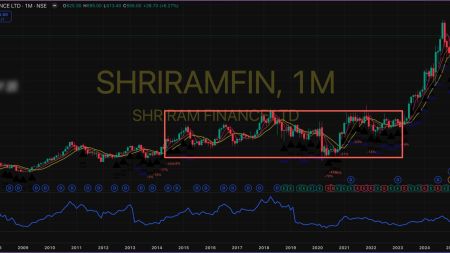
A sharp turn in interest rates is usually a make-or-break moment for lenders. For Shriram Finance, it might just be the catalyst needed to support its dream run.

After a decade of stagnant stock performance, Kaveri Seeds has staged a strong comeback. The company, once heavily reliant on cotton seeds, has successfully diversified into high-margin crops like maize and hybrid rice. Could this shift propel it toward sustained growth?

Eicher Motors has long been a favourite among investors, transforming from a Rs 30 stock in 2009 to a multi-bagger success. While Royal Enfield remains its core, the company has evolved into a two-pronged powerhouse, with Volvo-Eicher Commercial Vehicles' industrial engine. Now, as it ventures into global markets, the key question arises: can the company sustain its momentum?

Trent’s stock has plunged 37% since mid-October 2024, but it still continues to outpace competitors thanks to its fast fashion success with Zudio. However, with Shein’s re-entry into the Indian market and evolving retail landscape, can Trent maintain its dominance?
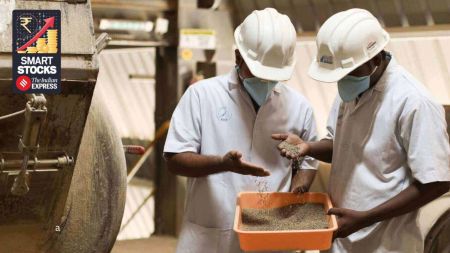
Avanti Feeds, India’s largest shrimp feed player, has struggled with profitability. However, an expansion in EBITDA margins for its shrimp feed segment has fueled a stock rally. But is this turnaround sustainable?
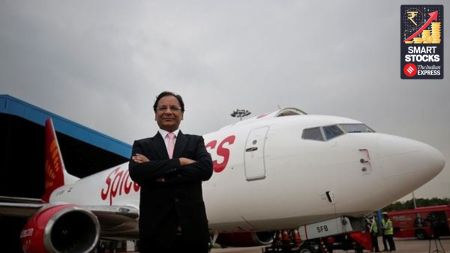
SpiceJet is operating with a market share below 4%, a 40% fleet grounding, and a 35% YoY revenue decline in Q3FY25. Despite these setbacks, it has raised Rs 3,000 crore in funding, with promoters injecting an additional Rs 294 crore. But is this enough? Is SpiceJet preparing for a second comeback, or is it running out of altitude?
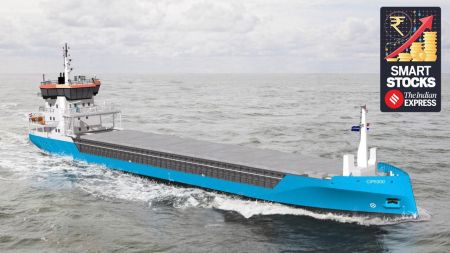
After a 1,500% plus rally since August 2022, shipbuilding stocks Mazagon Dock and Cochin Shipyard have seen a sharp correction. As India pushes to establish itself as a global shipbuilding market, which of these stocks has a better upside potential?

While brands like Tanishq and Kalyan Jewellers have built their success on premium pricing and high-margin sales, Thangamayil Jewellery prioritises fast inventory turnover, cost-efficient store locations, and competitive pricing. The company has managed to expand rapidly while maintaining profitability, and is now planning to add nearly 30 new outlets over the next three years. This ambitious growth plan raises a question: Can it scale profitably while maintaining lower prices than competitors?

Value investors often overlook paper companies, but JK Paper’s strong financials tell a different story. With value acquisitions and cost advantage, the company has built a strong foundation. But rising wood prices and import pressures could test its resilience.

In the last seven years, IHCL has moved from debt-heavy, slow-growth operations to a high-margin, cash-rich business model. Its EBITDA has grown almost 4x and net profit has jumped from a loss of Rs 63 crore in FY17 to Rs 1,259 crore in FY24. But with the stock trading at premium valuations, investors face a critical question: Is IHCL still a compelling investment?

MCX stock has dipped 26% in a little over a month as markets turn bearish. What has pulled down MCX shares? Was it an investor overreaction or weak fundamentals?
From 2008 to 2018, Hindustan Unilever Limited (HUL) was the undisputed king of India’s stock market, delivering a ~25% CAGR. But in the last five years, the stock has stagnated, delivering just ~3% CAGR. The company’s traditional model is being disrupted by Instagram-first brands and quick-commerce platforms. The question now is: Can HUL reinvent itself or has its golden era ended?

The microfinance sector's history shows that being the largest player can be fleeting. SKS Microfinance's dominance ended with the 2010 Andhra Pradesh crisis, and Bandhan Microfinance lost its top spot after becoming a bank in 2015. Now, CreditAccess Grameen faces a challenge in Karnataka, where a new ordinance is impacting its loan portfolio. While CAG expects the situation to stabilise within months, broader concerns raise questions about its long-term stability.